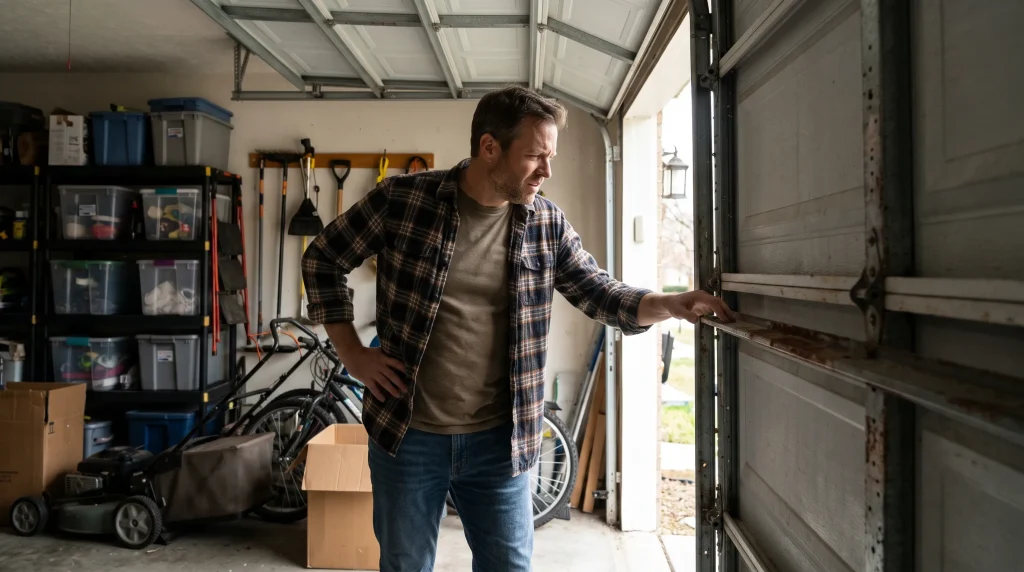
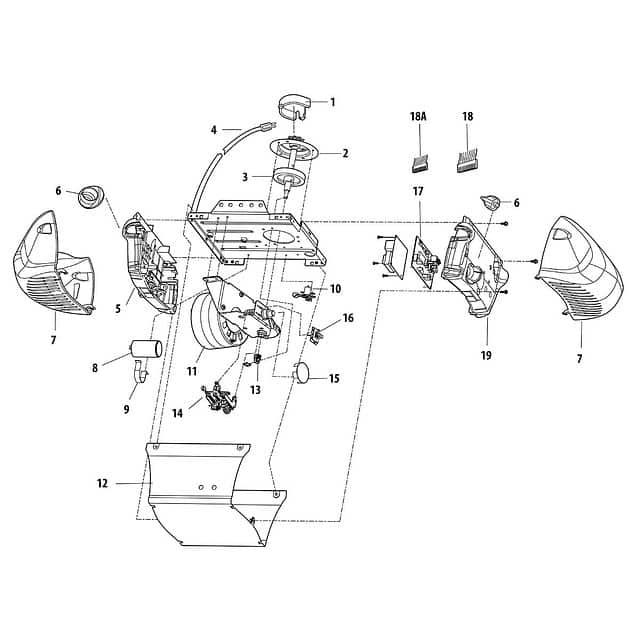
A garage door that won’t open, closes slowly, reverses on its own, or stops partway is almost always a sensor, limit-setting, or balance issue, not a fully broken door. These symptoms feel alarming because the door stops responding the way it should, but most trace back to something specific and fixable: dirty sensors, a drifted opener setting, or hardware adding just enough friction to throw off the timing. This guide walks through each symptom, what it usually means, and what to check first, including when it’s time for professional garage door service.
Key Takeaways
- Won’t open at all usually means power, the opener, or a stuck lock, not the door mechanism.
- Reverses before closing is almost always sensor alignment.
- Closes slowly usually means friction or balance, not the opener’s speed setting.
- Stops partway often means the sensors are reacting to an obstruction.
- One control working but not another narrows the problem to that device, not the whole system.
- Phantom operation should be treated as a safety issue, not a quirk.
- Basic garage door maintenance, like cleaning sensors and lubricating hardware, catches many of these symptoms early.
Troubleshooting Quick Reference
Symptom | Likely Cause | DIY or Call a Pro |
Won’t open at all | Power issue, dead remote battery, or opener failure | Check power/batteries first, call a pro if opener is unresponsive |
Reverses before closing | Misaligned or dirty sensors | DIY-safe to clean and realign |
Closes slowly | Dry hardware or borderline balance | DIY lubrication safe, balance issue needs a pro |
Stops partway | Obstruction or sensor read error | DIY-safe to clear and recheck |
Remote works, wall button doesn’t (or vice versa) | Isolated to that device | DIY-safe to troubleshoot the single device |
Opens or closes on its own | Stuck button, sensor interference, or wiring fault | Call a pro |
Opener runs, door doesn’t move | Disconnected trolley or opener failure | Call a pro |
For the complete noise-and-operation overview, read Why Is My Garage Door Making Loud Noises (Popping, Grinding, or Rattling) or Having Operation Issues?
The Door Won’t Open At All
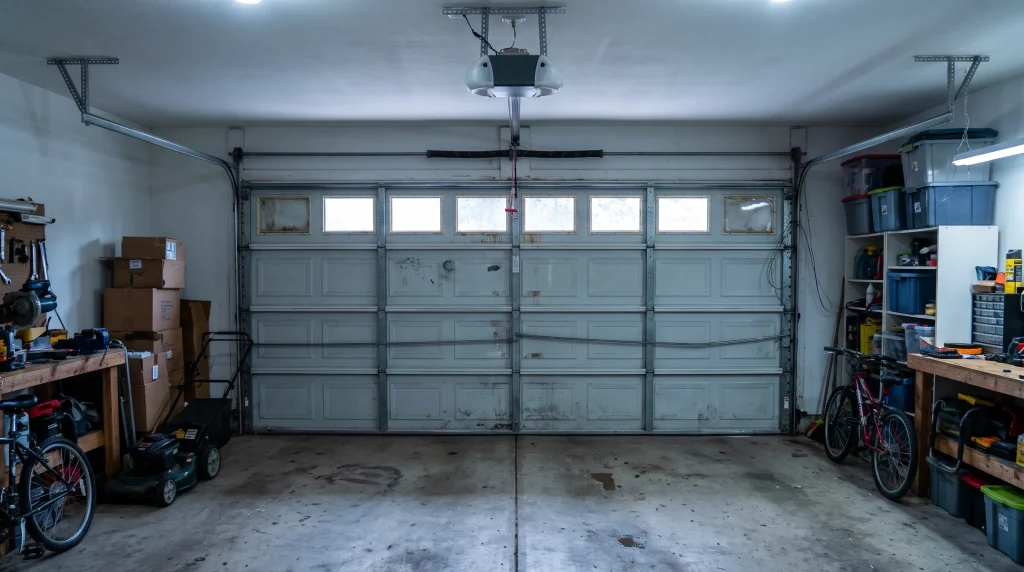
Symptom: Pressing the remote or wall button does nothing. No motor sound, no movement.
Most likely cause: A power issue (unplugged opener, tripped breaker), dead batteries, or the manual lock engaged.
Fix steps:
- Confirm the opener has power. A blinking or unlit light usually means no power.
- Replace remote and wall-button batteries if the opener has power but doesn’t respond.
- Check for a manual lock or vacation-mode switch that may be engaged.
Call a pro if: power is confirmed, batteries are fresh, and it still doesn’t respond. That points to an internal opener failure.
Why Won’t My Garage Door Opener Turn On?
This symptom is the most likely to have a simple, non-mechanical cause. Power and batteries account for a large share of “the door just stopped working” calls.
The Door Opens But Reverses Before Fully Closing
Symptom: The door starts closing, then reverses back open, every time or intermittently.
Most likely cause: Misaligned or dirty photo-eye sensors, an obstruction in the path, or close-force sensitivity set too high.
Fix steps:
- Check both sensors near the bottom of the track. They should face each other directly with no blinking light.
- Clean the lenses and clear the path, including items stored just inside the garage.
- If sensors are aligned and clean and reversal continues, the force sensitivity may need adjusting.
Call a pro if: reversal keeps happening with clean, aligned sensors and a clear path.
Why Does My Garage Door Reverse Right Before It Closes?
Automatic reversal is a required safety feature on every opener sold today. ULSE’s overview of automatic garage door safety standards covers why that feature exists. The fix is finding what’s triggering the reversal, never disabling the feature itself.
The Door Closes Slowly or Hesitates
Symptom: The door closes noticeably slower than it used to, or pauses partway through.
Most likely cause: Dry or worn hinges and rollers adding friction, or the door drifting close to out of balance.
Fix steps:
- Disconnect the opener with the manual release and lift the door by hand about halfway. It should stay in place; a heavy or dropping feel points to spring tension, not the opener.
- If it balances fine, re-lubricate hinges and rollers, since dry hardware often shows up first as a slower cycle.
- Compare closing speed after lubrication before assuming a bigger repair is needed.
Call a pro if: the door doesn’t stay balanced when lifted by hand.
Why Is My Garage Door Closing Slower Than Normal?
A slow close is easy to mistake for an opener malfunction when it’s really friction or balance. Routine upkeep like Angi’s guide to inspecting and maintaining a garage door is a useful baseline for catching this kind of drift early.
If the balance test points to a spring issue, When to DIY a Noisy Garage Door vs. Call a Pro (and What It Could Cost) breaks down why that’s never a DIY repair.
The Door Stops Partway Through Its Cycle
Symptom: The door starts moving, then stops mid-travel without fully opening or closing.
Most likely cause: Sensors detecting an obstruction (real or false), or incorrect travel limits for that position.
Fix steps:
- Check the door’s full path for anything the sensors might be reacting to, including a shifted item or a shadow crossing the beam.
- Clean the sensor lenses even if nothing is visibly in the way.
- If the stop happens at the same spot every time, the travel limit setting likely needs adjusting.
Call a pro if: the stopping point is inconsistent, or adjusting the limits doesn’t resolve it.
Why Does My Garage Door Stop Halfway?
A consistent stopping point points to a settings issue. An inconsistent one points to something physically interfering with the sensors, which is why checking the path first saves a wasted call.
Remote Doesn’t Work But the Wall Button Does (or Vice Versa)
Symptom: One control operates the door normally while the other does nothing.
Most likely cause: If it’s the remote, dead batteries or a lost sync. If it’s the wall button, a wiring issue or a failing button.
Fix steps:
- Replace the remote’s battery first, since this resolves most remote-only failures.
- If a fresh battery doesn’t fix it, resync the remote following the opener manufacturer’s instructions.
- For a non-responsive wall button, check that its wire connections at the opener are secure.
Call a pro if: resyncing doesn’t restore the remote, or the wall button wiring looks damaged or chewed.
Why Does My Garage Door Remote Stop Working While the Wall Button Still Works?
The two controls reach the opener through different paths, so a failure in one rarely affects the other. That narrows down the problem quickly.
The Door Opens or Closes On Its Own
Symptom: The door moves without anyone pressing a remote or wall button.
Most likely cause: A stuck wall button, an accidentally pressed remote, or a wiring fault sending a false signal.
Fix steps:
- Check that the wall button isn’t physically stuck in the pressed position.
- Inspect the wall button’s wiring for any pinched or exposed sections that could be shorting.
- Note the exact time and pattern of the movement, since that detail helps a technician isolate the cause.
Call a pro if: the movement continues after ruling out a stuck button. Unexplained movement is a safety concern, not just an inconvenience.
Why Does My Garage Door Open By Itself?
This is one symptom where calling sooner is the right call. A door moving without input is rare, but it’s worth treating as a safety issue rather than a curiosity.
The Opener Runs But the Door Doesn’t Move
Symptom: The opener sounds like it’s running, but the door stays put or barely shifts.
Most likely cause: The trolley has disconnected from the carriage (sometimes via the manual release), or an internal opener component has failed.
Fix steps:
- Check whether the manual release cord has been pulled, which disconnects the door from the opener on purpose.
- If it hasn’t, look at the trolley and carriage assembly for a visible disconnect.
- Don’t keep running the opener repeatedly if the door isn’t responding. That adds unnecessary wear.
Call a pro if: the trolley and carriage look connected and the door still doesn’t move. That’s opener-internal territory.
Why Does My Garage Door Opener Run But the Door Won’t Move?
This symptom often shows up alongside a humming or buzzing sound from the opener.
If that’s part of what you’re hearing, read Garage Door Noises Explained: What Popping, Grinding, and Rattling Sounds Really Mean.
Getting Past Common Garage Door Operation Issues
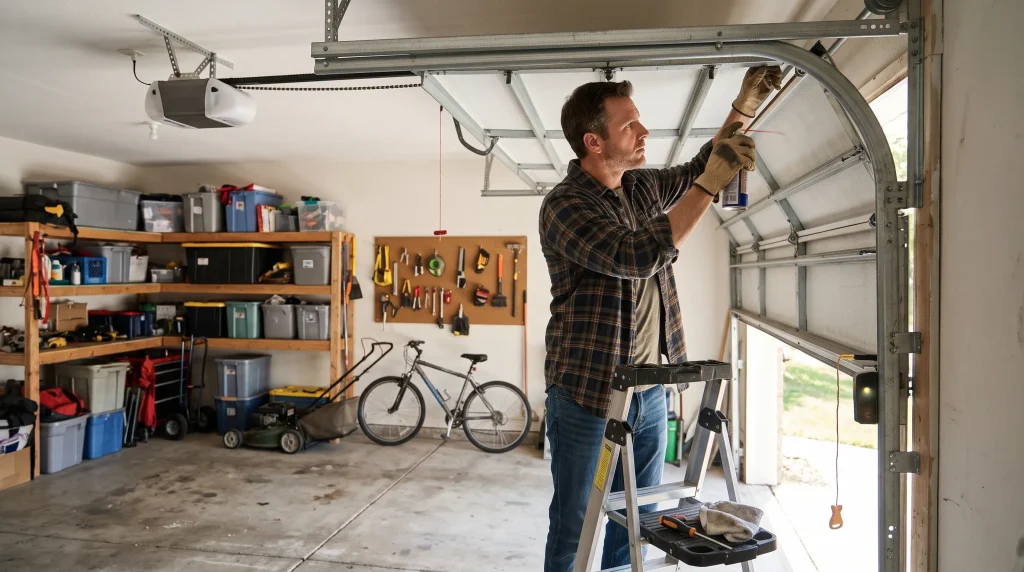
Most operation issues come down to sensors, settings, or basic maintenance, and several of the checks above are safe to do yourself in a few minutes. The exceptions are anything involving the door’s balance, springs, or a failed opener, all worth a professional look rather than a guess.
CCM Overhead Doors offers professional diagnosis and repair throughout the Oklahoma City area. Contact us or give us a call for a same-day assessment if the issue is still there after these checks.