The line between DIY-safe and pro-only comes down to one question: is the part under tension? Lubrication, sensor cleaning, and tightening loose hardware are safe weekend fixes. Springs, cables, and anything storing mechanical tension are not, regardless of how confident you feel with tools. Cost follows the same pattern: DIY-safe fixes cost little more than a tube of lubricant, while spring, cable, and opener repairs range from a modest garage door service call to a more significant investment depending on what’s actually failing. Knowing which category a repair falls into before you start is what keeps a Saturday project from turning into an emergency room visit or a bigger bill than the original problem.
Key Takeaways
- If a part stores tension (springs, cables), it’s a call-a-pro repair, no exceptions.
- Lubrication, sensor cleaning, and hardware tightening are safe, low-cost DIY fixes.
- Roller and track issues fall in between, DIY-safe for cleaning, pro territory for anything bent or structural.
- Cost roughly tracks risk: the fixes that are dangerous to DIY also tend to cost more to have done professionally.
- A professional quote after an in-person look is more reliable than any online estimate, including this one.
- Weatherstripping, lubrication, and hardware tightening are the three easiest wins for a homeowner willing to spend twenty minutes with basic tools.
- Staying on top of garage door maintenance is the cheapest way to avoid the more expensive repairs on this list.
DIY-Safe vs. Call-a-Pro: Cost and Risk Reference
Repair Type | DIY-Safe? | Typical Cost Level | Risk If Done Wrong |
Lubrication | Yes | Minimal | Low |
Sensor cleaning/alignment | Yes | Minimal | Low |
Loose hardware | Yes | Minimal | Low |
Roller replacement | Sometimes | Modest | Moderate |
Track adjustment | No | Moderate | High |
Spring repair/replacement | No | Significant | Severe |
Cable repair/replacement | No | Significant | Severe |
Opener repair/replacement | Usually not | Moderate to significant | Moderate |
Weatherstripping replacement | Yes | Minimal | Low |
For the full noise-and-operation breakdown behind these repair types, read our complete guide Why Is My Garage Door Making Loud Noises (Popping, Grinding, or Rattling) or Having Operation Issues?
Lubrication and Minor Maintenance: Always DIY
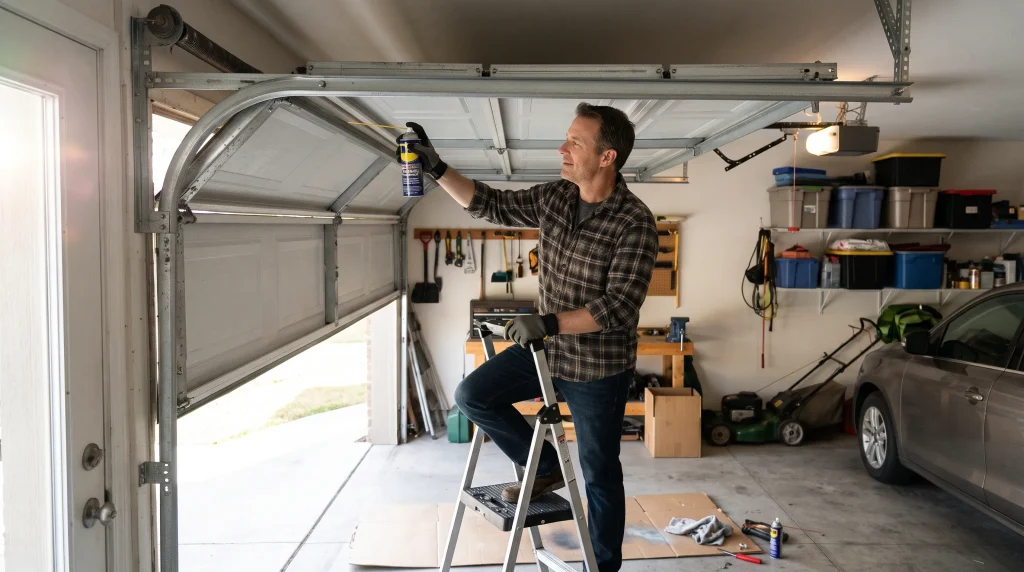
What it involves: Applying lithium or silicone-based lubricant to hinges, rollers, and spring coils.
Cost: Minimal. A single tube of the right lubricant covers a full door and lasts multiple applications.
Why it’s DIY-safe: No tools beyond the lubricant itself, no tension involved, and mistakes are essentially impossible to make.
Is Garage Door Lubrication a DIY Job?
Yes, without qualification. This is the one repair on this page with no real downside to doing yourself.
Sensor Alignment and Cleaning: DIY-Safe
What it involves: Wiping the photo-eye sensor lenses and adjusting their angle so they face each other directly.
Cost: Minimal. This takes a few minutes and no parts.
Why it’s DIY-safe: The sensors are low-voltage and external. There’s no risk of injury, and misaligning them further just means trying again.
Can I Align My Own Garage Door Sensors?
Yes. This is one of the most common calls technicians get for something the homeowner could have fixed in five minutes, which is worth trying before scheduling a visit.
Loose Hardware and Rattling: DIY-Safe
What it involves: Tightening hinge, bracket, and track bolts with a wrench or socket.
Cost: Minimal, assuming you already own basic hand tools.
Why it’s DIY-safe: Straightforward mechanical work with no stored tension involved.
Is Tightening Garage Door Hardware Something I Can Do Myself?
Yes, and it’s often the fix that resolves rattling for good. The one exception is if a panel itself is loose or warped, which points to something beyond simple hardware fatigue.
If you’re not sure whether what you’re hearing is rattling or something else, Garage Door Noises Explained: What Popping, Grinding, and Rattling Sounds Really Mean helps you match the sound to the cause first.
Roller and Track Issues: Depends on Severity
What it involves: Cleaning debris from the track (DIY) versus replacing worn rollers or straightening a bent track (pro).
Cost: Modest for roller replacement, moderate if the track itself needs correction.
Why it’s split: Cleaning is risk-free. Replacing rollers involves working near the door while it’s under partial tension, and a bent track affects the door’s alignment in ways that are easy to make worse without the right tools.
Should I Replace My Own Garage Door Rollers?
Cleaning the track yourself is fine. Roller replacement is a gray area best judged case by case, and a bent track is not a DIY repair under any circumstances.
Spring Repair or Replacement: Always Call a Pro
What it involves: Removing and replacing torsion or extension springs, which store enough tension to cause serious injury or death if handled incorrectly.
Cost: Significant, reflecting both the parts and the specialized tools and experience required to do it safely.
Why it’s pro-only: This isn’t a skill or confidence issue. Winding a torsion spring requires specific tools most homeowners don’t own, and the margin for error is essentially zero.
The Spruce’s overview of replacing garage door springs covers the process in detail, and even there, the guidance consistently points toward professional installation for exactly this reason. The tools required to safely wind a torsion spring, specifically a set of properly sized winding bars, aren’t something most homeowners keep in a garage, and substituting the wrong tool is one of the most common causes of injury in DIY spring attempts.
Can I Replace My Own Garage Door Springs?
Technically, yes. Practically, no. This is the single repair on this list where the cost of a mistake is measured in injuries, not dollars.
Cable Repair or Replacement: Always Call a Pro
What it involves: Replacing the cables that work with the springs to lift and lower the door.
Cost: Significant, similar to spring replacement, and often done at the same time since cables and springs wear together.
Why it’s pro-only: Cables are under the same kind of load as springs. A frayed or slack cable is often a sign the spring system is already under strain.
Are Garage Door Cables a DIY Repair?
No. If you’re already comfortable ruling out a spring issue on your own, a cable issue is the same category of problem and deserves the same caution.
Weatherstripping Replacement: DIY-Safe
What it involves: Removing the worn rubber seal along the bottom or sides of the door and installing a new strip in the existing track.
Cost: Minimal. Weatherstripping is inexpensive and sold by the foot or in pre-cut kits sized to standard door widths.
Why it’s DIY-safe: This is a cosmetic and energy-efficiency fix, not a structural one. There’s no tension involved, and the worst-case outcome of a mistake is needing to redo the cut.
Can I Replace My Own Garage Door Weatherstripping?
Yes. This is one of the most overlooked DIY-safe repairs, and it’s often what’s actually behind a draft or a strip of daylight at the bottom of the door rather than anything more serious.
Opener Repair or Replacement: Usually Call a Pro
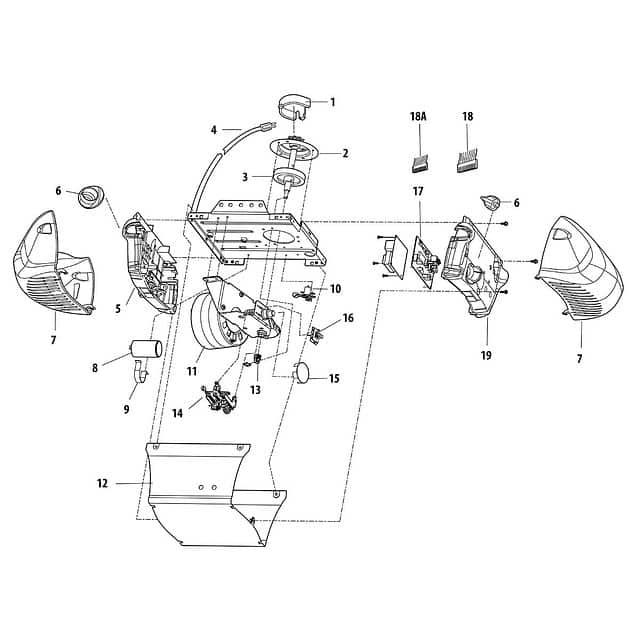
What it involves: Diagnosing and fixing a failing motor, gear, or circuit board inside the opener unit, or replacing the unit entirely.
Cost: Moderate for a repair, higher for full replacement, though replacement often makes more sense on an older unit than repeatedly fixing individual failures.
Why it’s usually pro territory: Opener electronics require diagnostic experience most homeowners don’t have on hand, and a misdiagnosed repair can mean paying twice, once for the wrong part and once for the right one.
If you’re weighing whether to fix the opener or replace it as part of a bigger upgrade, Bob Vila’s guide to choosing a garage door is a useful reference for what factors matter in that decision.
Should I Repair or Replace My Garage Door Opener?
It depends on the opener’s age and how many parts are failing at once. A single, isolated failure on a newer unit usually favors repair. Multiple issues on an older unit usually favor replacement.
If the problem is more about how the door behaves than what it sounds like, Garage Door Won’t Open, Closes Slowly, or Reverses? Common Operation Problems and Fixes covers that territory in more depth.
Choosing the Right Path for Your Garage Door Repair
The pattern across every repair on this page is consistent: if it’s low-risk and low-cost, it’s worth trying yourself first. If it involves tension, electronics, or the door’s structural alignment, the cost of a mistake outweighs whatever you’d save.
CCM Overhead Doors offers professional inspection and repair throughout the Oklahoma City area, with an honest read on whether your situation is DIY-safe before any work begins. Contact us or give us a call for a same-day assessment and a clear cost estimate.