
There comes a point with every garage door remote where troubleshooting stops making sense, and replacement becomes the more practical decision. The challenge is knowing when that point has arrived. A remote that is acting up does not always need to be replaced right away, but there are specific signs that tell you when continuing to work around the problem is no longer worth your time or money.
The Remote Works Inconsistently Even After a Fresh Battery
A new battery should restore full performance to a functioning remote. If you have replaced the battery with a brand new one and the remote is still skipping, hesitating, or responding only occasionally, the battery is not the problem. Something inside the remote is no longer working reliably.
What This Means
- Inconsistent performance after a battery change points to worn internal components, deteriorating contacts, or a circuit board that is beginning to fail.
- A remote that works one day and not the next, with no clear pattern or explanation, is a strong indicator that the unit is nearing the end of its reliable life.
- Continuing to use an inconsistent remote means unpredictable access to your garage, which is a convenience issue and a potential security concern.
- At this stage, replacement is almost always more practical than attempting an internal repair on a low-cost remote unit.
If you have already gone through the standard troubleshooting steps and things are still not working as they should, our guide on How to Troubleshoot a Garage Door Remote at Home can help you confirm whether the issue is with the remote or something else before committing to a replacement.
The Remote Only Works at Very Close Range
A healthy garage door remote should operate reliably from 50 to 100 feet away under normal conditions. If yours only responds when you are standing just a few feet from the opener, and you have already ruled out antenna and interference issues, the remote’s transmitter is likely weakening.
What This Means
- Reduced range that persists after battery replacement and re-syncing is a sign of a degraded transmitter inside the remote.
- This type of degradation is common in remotes that are several years old or have been exposed to heat, moisture, or physical impact over time.
- A remote with severely limited range creates daily frustration and is not likely to improve on its own.
- If antenna and signal interference have already been ruled out through the troubleshooting process, replacing the remote is the logical next step.
If you’ve already checked the antenna and eliminated as many interference causes as possible, replacing the remote is typically the most effective solution. A garage door repair professional can help you choose a compatible replacement and ensure it’s properly programmed for reliable performance.
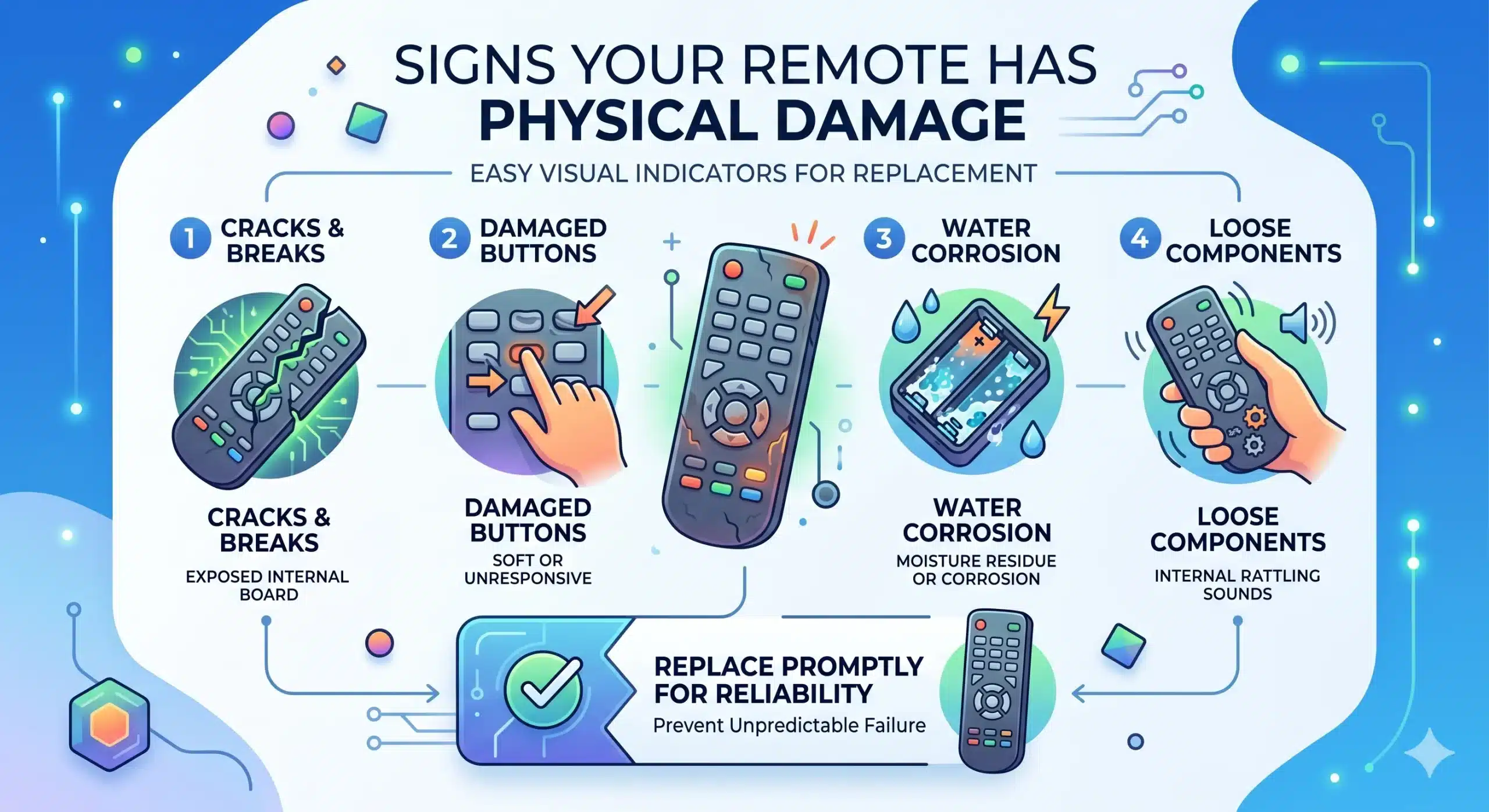
The Remote Has Visible Physical Damage
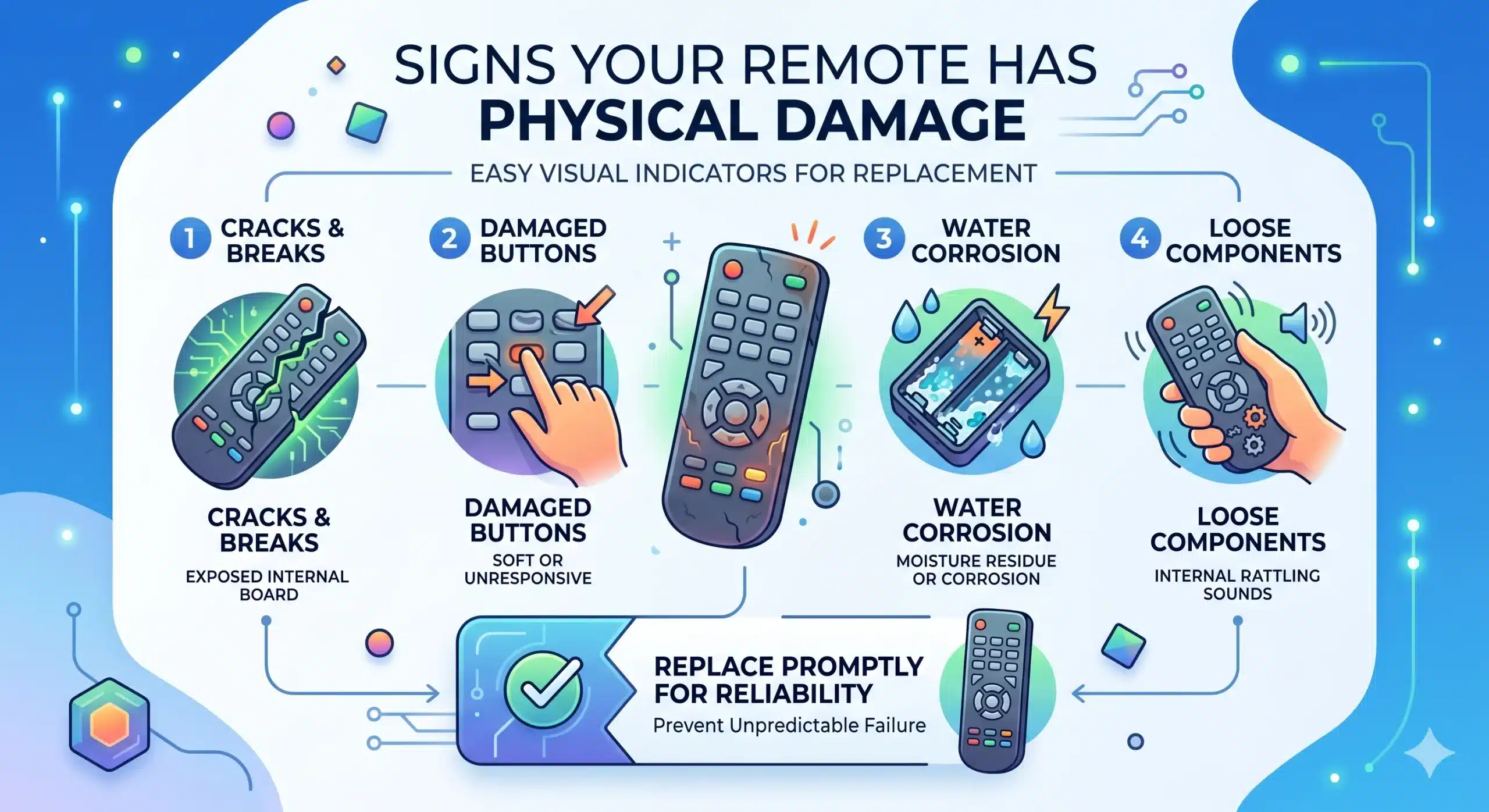
Physical damage is one of the clearest signs that a remote needs to be replaced. Remotes that have been cracked, dropped onto hard surfaces, run over, or submerged in water are unlikely to perform reliably for long, even if they seem to be working in the short term.
What to Look For
- Cracks or breaks in the casing that expose the internal circuit board to dust, moisture, or debris.
- Buttons that feel soft, stuck, or unresponsive when pressed, which often indicates damaged contacts underneath.
- White residue, discoloration, or visible corrosion inside the battery compartment or on the circuit board, which are signs of water damage.
- A remote that rattles when shaken, suggesting internal components have come loose.
- Any remote with significant physical damage should be replaced promptly, as continued use can cause unpredictable behavior or complete failure at the worst possible moment.
The Remote Has Been Exposed to Water or Extreme Heat
Oklahoma City’s climate brings both intense summer heat and unpredictable storms, and both can take a serious toll on garage door remotes. Heat and moisture are two of the most common causes of premature remote failure, and the damage they cause is not always immediately obvious.
What This Means
- A remote left on a car dashboard during an Oklahoma summer can reach internal temperatures high enough to warp plastic components and degrade the battery and circuit board.
- A remote that got soaked in a rainstorm or was accidentally submerged may appear to work after drying out, but internal corrosion often develops over the following weeks and causes gradual failure.
- If your remote has been through significant heat or moisture exposure more than once, replacement is a smarter investment than waiting for it to fail completely at an inconvenient time.
- Storing your remote properly going forward, away from direct heat and moisture, will extend the life of the replacement unit considerably.
The Remote Is No Longer Compatible With Your Opener
Garage door technology has advanced significantly over the past two decades. If you have recently upgraded your opener or are considering doing so, your existing remote may not be compatible with the new system. Similarly, older remotes that operate on outdated frequencies may no longer function reliably as newer wireless technology in the surrounding area becomes more common.
What to Know
- Openers manufactured before 1993 used fixed frequency codes that are no longer considered secure by modern standards. Remotes paired with these systems should be replaced along with the opener.
- If you have upgraded to a smart opener or a rolling code system, your old remote will need to be replaced with a compatible unit.
- Modern remotes generate a new code with every use, making them significantly more secure than older fixed-code alternatives.
- A garage door professional can confirm whether your current remote is compatible with your opener and recommend the correct replacement if it is not.
If you’re unsure about compatibility, a garage door opener repair professional can quickly identify your system type and recommend the correct remote replacement to ensure reliable and secure operation.
You Are Reprogramming the Remote Too Frequently
Re-syncing a remote once after a power outage or opener reset is completely normal. However, if you find yourself needing to reprogram the remote on a regular basis just to keep it working, that is not normal behavior, and it is a sign that something is wrong.
What This Means
- A remote that loses its programming frequently may have a failing memory chip or a deteriorating circuit board that cannot hold a stable connection with the opener.
- Frequent reprogramming can also point to an issue with the opener’s receiving board, so it is worth having a professional assess both components before replacing just the remote.
- If the opener checks out and the remote continues to lose its programming, replacement is the appropriate next step.
- A reliable remote should hold its programming indefinitely under normal conditions without any need for regular re-syncing.
The Buttons Are Worn Down or Unresponsive
The physical buttons on a garage door remote take thousands of presses over their lifetime. Over time, the rubber or plastic contacts underneath the buttons wear down and lose their ability to complete the circuit when pressed. This is a gradual process that can make the remote feel like it is working intermittently when the real issue is physical wear.
What to Look For
- Buttons that require extra force or multiple presses to register a response.
- A button that feels flat or sunken compared to how it felt when the remote was new.
- Uneven response across different buttons on the same remote, where some work fine and others do not.
- Visible wear, cracking, or peeling on the button surface itself.
- Once button contacts are worn to this degree, the remote is at the end of its functional life and replacement is the most sensible solution.
The Remote Is More Than Five to Seven Years Old
Garage door remotes do not have an official expiration date, but most units are designed for a lifespan of around five to seven years under regular use. A remote that has been in daily service for longer than that is operating past its intended life, and age-related wear on the internal components will eventually affect performance.
What This Means
- An older remote may continue to function for some time past the five to seven-year mark, but reliability will decrease gradually and unpredictably.
- If your remote is aging and you are already noticing performance issues, replacing it proactively is far less frustrating than waiting for a complete failure.
- Pairing a remote replacement with a professional inspection of the full garage door system is a smart move, particularly for Oklahoma City homeowners heading into storm season or the heat of summer.
Keeping your system well-maintained from the start is the best way to extend the life of any replacement remote. Our guide on Garage Door Remote Maintenance Tips to Avoid Issues covers everything you need to know about ongoing care.
Pairing a remote replacement with a broader system inspection is always a smart move for aging garage door setups, and Angi’s guide on how to inspect and maintain your garage door walks homeowners through exactly what a thorough inspection should cover.
A Replacement Remote Outperforms Your Current One
One of the simplest ways to confirm that your remote needs to be replaced is to test a compatible replacement unit. If a new remote pairs easily, works at full range, and responds consistently while your old one continues to struggle, the evidence is clear.
What to Do
- Ask a garage door professional to bring a compatible test remote to your service appointment, or purchase a manufacturer-approved replacement to compare performance side by side.
- If the new remote works perfectly and the old one does not, there is no reason to continue using the old unit.
- Replacement remotes are available through the opener manufacturer, licensed garage door professionals, and some home improvement retailers. Average costs vary depending on the brand and model of your opener.
- Always confirm compatibility before purchasing a replacement to make sure the new remote will work correctly with your specific opener model and generation.
If testing a replacement remote reveals that the full opener system is also due for an upgrade, This Old House’s complete guide to garage doors is a practical resource for understanding the full range of options available to homeowners considering a system-wide improvement.
You Have Safety or Security Concerns About Your Current Remote
A garage door remote is not just a convenience device. It is also a security tool that controls access to your home. If your remote has been lost, stolen, or used by someone who should no longer have access to your property, replacing it promptly is the responsible choice.
What to Know
- If a remote is lost or stolen, reprogram all remaining remotes and keypads immediately using the opener’s “Learn” button to invalidate the missing unit.
- If you have moved into a previously owned home and are unsure how many remotes were programmed to the opener, a full reset of the opener and re-programming of only your own remotes is strongly recommended.
- Older fixed-code remotes that were common before 1993 are particularly vulnerable to code grabbing, a method where a device intercepts and copies the remote’s signal. If your system still uses fixed codes, upgrading to a rolling code remote and compatible opener is a worthwhile security investment.
For a full picture of the underlying issues that can affect remote performance and security, our guide on Garage Door Remote Not Working? Possible Reasons Why covers the most common causes in detail.
Replacement Is Not a Step Backward, It Is the Smart Move
Holding onto a remote that no longer performs reliably often leads to more frustration and inconvenience than simply replacing it. Recognizing the warning signs early allows you to stay in control of your garage door system instead of dealing with an unpredictable device.
CCM Overhead Doors understands that Oklahoma City homeowners already have plenty to manage with changing seasonal demands. When your remote is showing clear signs that it’s time for a replacement, it’s best to act before the problem gets worse. Contact us or give us a call today to choose the right replacement and get your entire garage door system working exactly as it should.