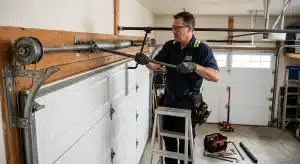
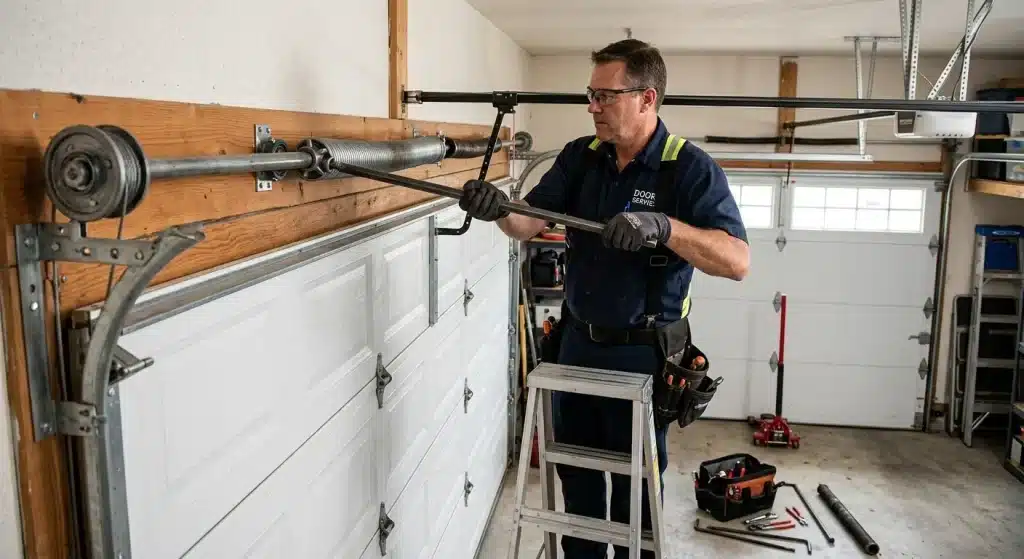
The cost of a spring replacement is determined by several factors, including your door’s weight, the required spring wire size, the spring’s cycle life, and any necessary hardware updates for optimal safety. While standard single-spring configurations typically start at $350.00 and double-spring replacements at $550.00, we provide a firm, transparent quote after an on-site assessment to ensure we install the correct, high-quality springs tailored to your specific door.
Because pricing depends on several details specific to your door, no two quotes look exactly alike, even for two homes on the same street. Door weight, spring type, wire gauge, and hardware condition each move the price independently, which is why a flat number quoted online rarely matches what you’ll pay. Homeowners who attempt to fix broken garage door springs themselves also take on a real safety risk that a technician’s pricing already accounts for.
Key Takeaways
- Single-spring jobs typically start around $350; double-spring jobs typically start around $550.
- Door weight, spring wire size, and cycle life are the three biggest cost drivers.
- Torsion springs cost more than extension springs, but last longer and perform better.
- Most two-car doors use two torsion springs, and it’s standard to replace both together even if only one broke.
- DIY spring kits look cheaper upfront, but the injury risk from released tension is a real cost most homeowners shouldn’t take on.
- An on-site assessment from a professional garage door service is the only way to get an accurate, firm quote.
DIY vs. Professional Spring Replacement: Cost Comparison
DIY Replacement | Professional Replacement | |
Upfront cost | Lower (parts only) | Higher (parts and labor) |
Safety risk | High, springs are under extreme tension | Low, technicians use proper winding tools |
Correct spring match | Easy to get wrong (wire size, cycle life) | Matched to your exact door |
Warranty | None on labor | Labor and parts typically warrantied |
Time investment | Several hours, plus tool costs | Usually completed in one visit |
Call a pro if… | You’re unsure of spring type, tension, or tools | Any doubt at all, this is not a job to learn on |
The parts-only savings of a DIY kit can look appealing, but a mismatched spring, a rushed tension release, or a missing safety cable can turn a $60 part into a serious injury.
For the full walkthrough of what DIY replacement involves, read Insider Tricks: How to Replace Garage Door Spring and Save Big.
1. Door Weight and Size
The heavier and wider your garage door, the more spring tension it needs, and the more it costs to replace that spring correctly. This is usually the first thing a technician evaluates, because it narrows down which spring specifications are even possible for your door.
How Door Weight and Size Affect Garage Door Spring Replacement Cost
A single-car door needs less lifting force than a double-car or heavy insulated door, so it typically uses a lighter, less expensive spring. Wood, glass-panel, and insulated steel doors weigh more than standard steel doors and often need a heavier-duty, pricier spring. Door height matters too: a taller door needs a longer spring, which shifts both size and price. If you’re not sure what your door weighs, that’s part of what a technician checks on-site; guessing is one of the fastest ways to end up with an under-rated spring that fails again within months.
If your door has already stopped responding altogether, rather than just feeling heavy, read When a Garage Door Spring Breaks and Why the Door Suddenly Stops Working Properly for what’s likely happening.
2. Torsion Springs vs. Extension Springs
Which type of spring your door uses has a direct effect on price, and the two aren’t interchangeable without also changing other hardware.
Torsion Spring vs. Extension Spring Replacement Cost
- Torsion springs mount on a shaft above the door and are standard on most modern doors. They cost more per spring than extension springs, but last longer and wind more evenly.
- Extension springs run along the tracks on either side of the door and cost less individually, but wear out faster and need safety cables to contain them if they snap.
- If you already have extension springs, replacing like-for-like is usually the lower-cost option, but a technician can tell you if upgrading to torsion springs makes sense.
3. Single Spring vs. Double Spring Replacement
Whether you need one spring replaced or two is one of the biggest swings in the final price, and it’s a question we get asked on nearly every call.
Why Double Spring Replacement Costs More Than Single Spring Replacement
- Single-car doors and some lighter double doors run on one torsion spring, which is why single-spring jobs start around $350.
- Most two-car garage doors run on two torsion springs together, which is why double-spring jobs start around $550.
- Even when only one spring has broken, replacing both at the same time is the standard recommendation, since the second spring has seen the same wear and is usually close behind.
- Replacing only one spring leaves the door unevenly balanced and wears the tracks and cables unevenly.
4. Spring Wire Size and Cycle Life
Not all springs of the same type are priced the same. Wire gauge and cycle rating both move the number, sometimes by a noticeable margin.
How Spring Wire Size and Cycle Life Affect Replacement Pricing
A spring’s wire size, meaning its thickness, and its cycle life, meaning how many cycles it’s rated to survive, are matched to your door’s weight and how often it’s used. A standard-cycle spring, rated around 10,000 cycles, costs less than a high-cycle spring rated for 20,000 cycles or more. Homes that open the door multiple times a day often get more value from the higher-cycle option, since it delays the next replacement by years. These specifications follow published engineering standards for automatic garage door components, which is why a mismatched spring is both a safety issue and a warranty issue.
For more on how these standards are set, ULSE’s overview of automatic garage door standards explains how cycle-life and safety ratings are developed.
5. Hardware and Safety Upgrades
Sometimes the spring isn’t the only thing needing attention, and skipping needed hardware adds risk, not savings.
When Hardware Upgrades Add to Garage Door Spring Replacement Cost
- Cables, drums, bearing plates, or center brackets: if worn, rusted, or undersized for the new spring, a technician will flag them for replacement at the same time.
- Combining repairs in one visit is almost always cheaper than a second call later, and it avoids installing a new spring on hardware that’s already failing.
- Safety cables: older extension-spring systems sometimes get these added if never installed, a small add-on that reduces injury risk.
If you’d rather see the full range of what a professional visit covers before booking, Need Garage Door Spring Replacement? Quality Service Guaranteed in Oklahoma City, OK has more detail on our guaranteed spring services.
6. Labor, Timing, and Service Call Type
The springs themselves are only part of the bill. When and how the work gets done matters too, and this is often the difference between a routine visit and an emergency one.
Does Same-Day or Emergency Garage Door Spring Service Cost More?
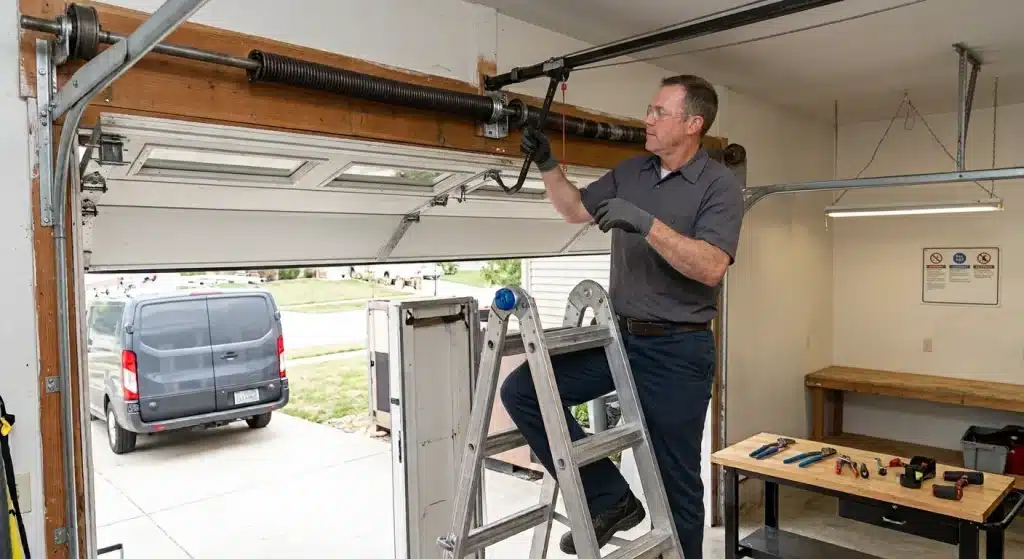
Standard, scheduled spring replacement is priced the same regardless of the day of the week. Same-day or after-hours emergency service, such as when a broken spring has trapped a vehicle inside or left the door open overnight, can carry an added fee since it pulls a technician off their regular schedule. If you’re not sure whether your situation counts as an emergency, our guide on What Happens When a Garage Door Spring Breaks and Why It’s a Big Deal? walks through what’s happening to your system and when it’s safe to wait.
This kind of sudden failure is common enough that it’s covered in general home-repair guidance too; Angi’s guide on what to do when a garage door spring breaks covers the same urgency factors that drive up the cost of an emergency call. If your door is safely secured and isn’t an active hazard, next-business-day service is usually the lower-cost route.
Get a Firm Quote for Garage Door Spring Replacement
The only way to know your real number is an on-site assessment, since door weight, spring type, wire size, and hardware all factor in together. Prices you see online or hear from a neighbor are only useful as a rough starting point, not a number you can rely on for your own door. A quick call can usually get you scheduled for an assessment within a day or two, so you’re not left guessing for long.
CCM Overhead Doors provides that assessment and a firm, transparent quote before any work begins, so there are no surprises on the invoice. That means the price confirmed on-site is the price you pay, whether the job ends up being a simple single-spring swap or a more involved double-spring replacement with hardware upgrades. A technician will also walk you through exactly what’s being replaced and why, so you understand the invoice rather than just paying it. Contact us or give us a call to schedule your evaluation today and get a same-day quote.