A broken garage door spring can bring your daily routine to a sudden halt, and Oklahoma City homeowners have a trusted, guaranteed option for getting it fixed the first time correctly. Garage door springs carry the full weight of the door as it opens and closes, and once one wears out or snaps, the door becomes difficult, unbalanced, or unsafe to operate.
This guide covers the signs of spring failure, what a proper replacement involves, and how to get fast, reliable service across the Oklahoma City area. Whether you’re noticing early warning signs of broken garage door springs or already dealing with a door that won’t move, knowing what to look for and who to call makes the difference between a quick fix and a much bigger repair bill.
Key Takeaways
- Garage door springs typically last 7 to 10 years, or around 10,000 cycles, before needing replacement.
- Difficulty opening the door, visible rust or gaps, loud noises, and uneven movement are the clearest signs of a failing spring.
- Torsion springs generally outperform extension springs in durability and control, though both are common on residential doors.
- Matching spring type, wire gauge, and cycle life to your specific door is essential for safe, lasting performance.
- Replacement is not a safe DIY project for most homeowners, given the tension stored in the springs.
- Guaranteed garage door service for spring replacement is available across Oklahoma City and surrounding communities.
Spring Type at a Glance
Spring Type | Typical Lifespan | Best For | Replacement Cost Tier |
Torsion spring | 10,000–20,000+ cycles | Heavier, two-car doors | Higher |
Extension spring | 7,000–10,000 cycles | Lighter, single-car doors | Lower |
Understanding the Role of Garage Door Springs
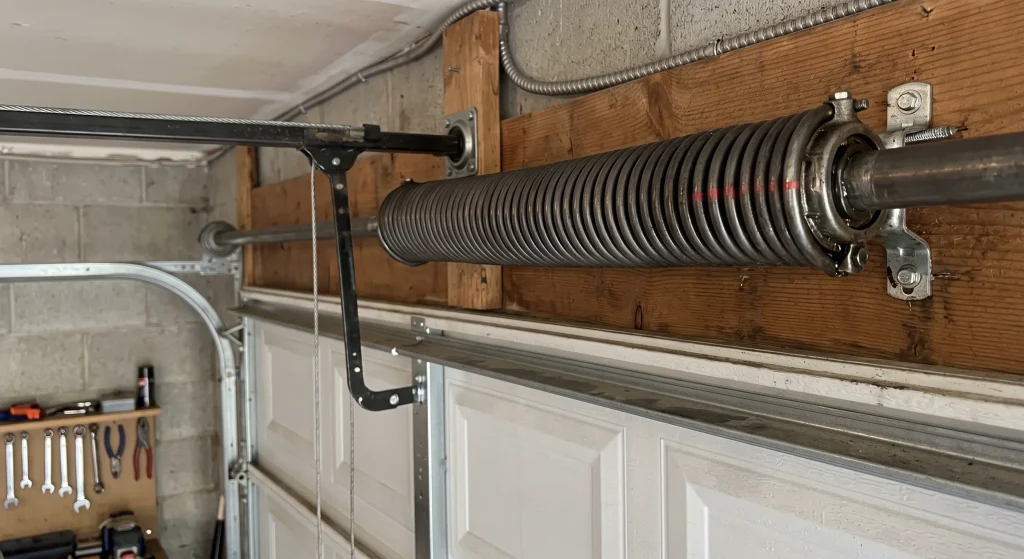
Garage door springs counterbalance the door’s weight, allowing it to open and close with minimal effort. Without them, lifting a garage door by hand or by opener would be difficult and genuinely dangerous. Springs absorb and release energy as the door moves, keeping the motion smooth and controlled rather than sudden and jarring.
There are two main types of springs, and each is suited to different door weights and usage patterns.
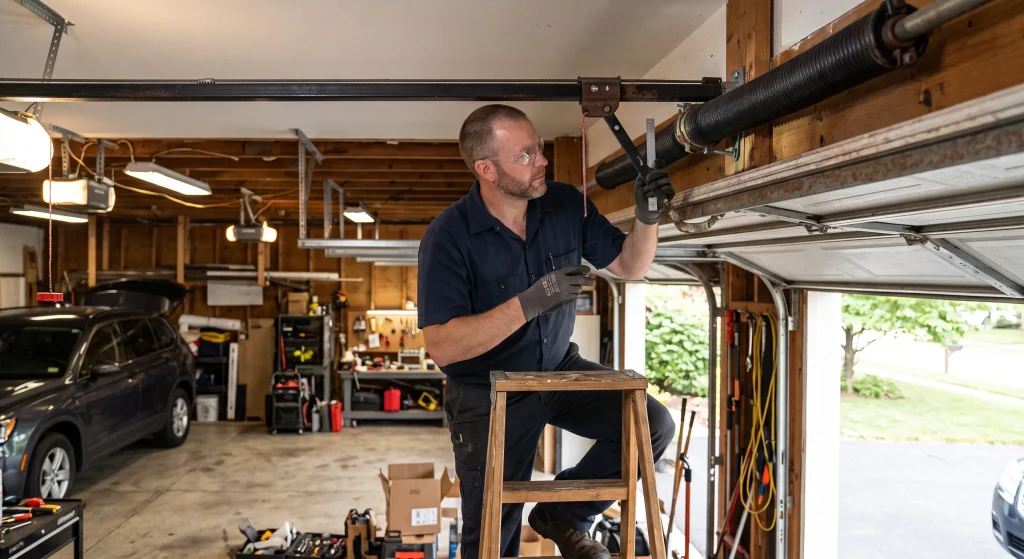
- Torsion springs: mount horizontally on a shaft above the door, twisting to store the energy needed to lift it. They’re durable, offer smoother operation, and are typically used on heavier, wider doors.
- Extension springs: sit on either side of the door and stretch as it closes, contracting to help lift it open. They’re common on lighter, single-car doors and are more affordable, though they wear out faster and need safety cables to prevent accidents if they snap.
Spring lifespan is measured in cycles, with one cycle being a full open-and-close. A standard spring lasts around 10,000 cycles, roughly 7 to 10 years depending on use, while high-cycle springs rated for 20,000 cycles or more suit homes that use the garage door heavily, such as households that treat the garage as a main entrance rather than a secondary one. If your door has already gone from working fine to not responding at all, When a Garage Door Spring Breaks and Why the Door Suddenly Stops Working Properly explains exactly what’s happening.
Signs Your Garage Door Springs Need Replacement
Recognizing early warning signs helps you address a failing spring before it turns into a bigger, costlier problem.
- Difficulty opening or closing the door, even with the opener’s help, is often the first sign something’s wrong.
- Visible gaps or rust on the coils are a clear visual confirmation; a gap in a torsion spring specifically means it has already snapped.
- Loud popping or snapping noises during operation usually indicate a spring has failed outright, while grinding or squeaking sounds point to friction or wear that’s heading in that direction.
- A door that falls too quickly, opens unevenly, or won’t stay open or closed on its own is all signs that the springs can no longer properly balance the door’s weight.
For a broader look at how these symptoms connect to the door as a whole system, This Old House’s overview of garage doors is a useful general reference alongside the spring-specific signs above.
Safety Precautions for Garage Door Spring Replacement
Spring replacement is a high-risk task because of how much tension the springs store.
- Understand the risks involved: attempting replacement without the right tools and experience risks a sudden, forceful release that can cause serious injury.
- Use the right tools: proper replacement requires specialized tools, including winding bars for torsion springs, a sturdy ladder, and quality wrenches; makeshift substitutes increase the chance of slippage or improper tensioning.
- Disconnect the opener and secure the door: the door should always be secured in the closed position so it can’t move unexpectedly while the springs are under partial or no tension.
- Consider hiring a professional: most homeowners are better served by a certified technician who can complete the job safely, calibrate the new springs correctly, and confirm the door is properly balanced.
For a closer look at just how much can go wrong once a spring fails, read What Happens When a Garage Door Spring Breaks and Why It’s a Big Deal?
Step-by-Step Guide to Garage Door Spring Replacement
A professional replacement generally follows the same core sequence regardless of spring type.
- The correct replacement springs are selected based on measurements taken from the existing ones, including length, diameter, and wire size, since mismatched springs cause improper tension and imbalance.
- The opener is disconnected, and the door secured before tension is carefully released from the old springs.
- The old springs are removed, along with any attached cables or pulleys.
- The new springs are installed and properly aligned.
- Tension is reapplied gradually, checking balance at each stage.
- The door’s operation is tested to confirm smooth, even movement before the job is considered complete.
If you’re weighing whether to attempt this yourself, Insider Tricks: How to Replace Garage Door Spring and Save Big walks through these same steps in more detail, along with the tools and risks involved.
Choosing the Right Replacement Springs
Getting the replacement spring right matters as much as the installation itself.
- Spring type and specifications: size, gauge, and length need to match the original, since a spring that’s too small or too large won’t provide the correct tension for your specific door.
- Cycle life: standard springs typically offer 10,000 cycles, while high-cycle options rated for 20,000 or more suit homes with frequent garage door use.
- Material and coating: zinc or powder coatings help resist rust and corrosion in a humid or high-salt climate, extending the spring’s usable life.
- Choosing quality brands: a reputable brand, rather than the cheapest available option, helps avoid premature failure and the added repair costs that come with it.
For a full breakdown of what these choices mean for your final price, read How Much Does It Cost to Replace a Garage Door Spring? for real numbers by spring type and configuration.
Regular Maintenance to Extend Spring Lifespan
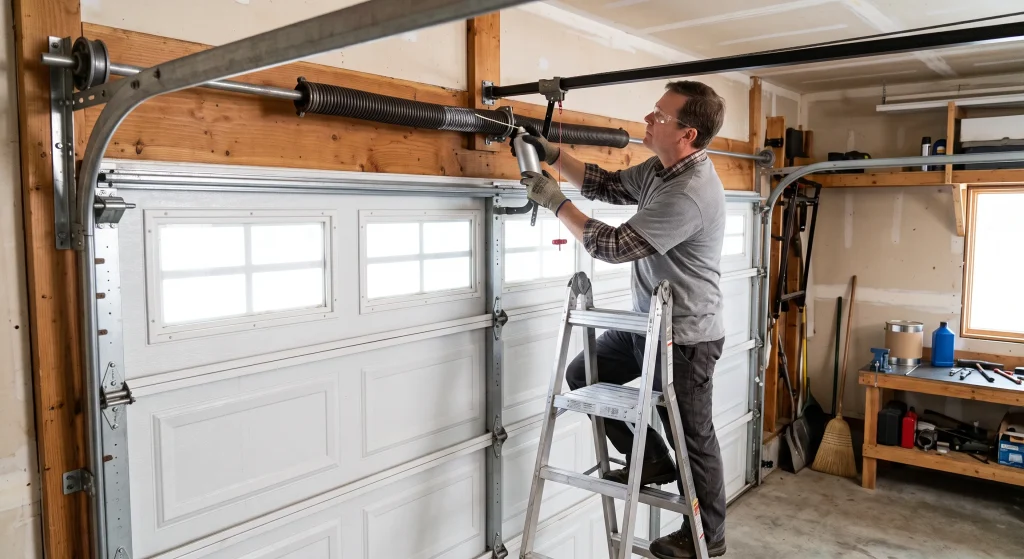
Proper maintenance meaningfully extends how long a set of springs lasts.
- Lubricate the springs: applying a silicone-based lubricant every six months reduces friction and helps prevent rust from forming on the coils.
- Inspect for wear and damage: regularly checking for wear, rust, or gaps lets you catch a developing problem before it becomes a full failure.
- Run a balance test: disconnecting the opener and manually operating the door helps confirm the springs are still providing proper support.
For a step-by-step homeowner checklist that pairs well with this routine, Angi’s guide to inspecting and maintaining your garage door covers similar upkeep tasks in more depth.
Why Choose Us for Spring Replacement
Timely spring replacement keeps your garage door safe, balanced, and reliable, while a worn or damaged spring left unaddressed only becomes more dangerous and more expensive to fix the longer it’s ignored.
CCM Overhead Doors provides guaranteed spring replacement across Oklahoma City, Mustang, Yukon, Norman, Moore, Edmond, Midwest City, and Del City, with technicians who diagnose the issue correctly and install springs matched to your door’s exact specifications. Every job is backed by a warranty on both labor and parts, so you’re not left guessing whether the fix will hold. Most visits are scheduled the same day or the next business day, which keeps a stuck or unsafe door from sitting unresolved any longer than necessary. Contact us or give us a call to schedule your same-day quote today and get your garage door back to safe, reliable operation.