Your garage door opener has been acting up. Maybe it is slower than it used to be. Maybe it has needed two service calls in the last year. Or maybe it just stopped working entirely. At some point, every homeowner faces the same question: Is it worth repairing, or is it time to replace it?
Getting this decision right matters. Choosing garage door opener repair when replacement is the smarter move means spending money on a system that will keep failing. Choosing to replace when a simple garage door opener repair would have done the job means spending more than necessary. Neither outcome is ideal.
For homeowners in Oklahoma City, where seasonal weather conditions put extra stress on garage door systems year-round, making the right call at the right time protects both your budget and your home. This guide walks through the key factors that help you decide with confidence.
Consider the Age of Your Opener First
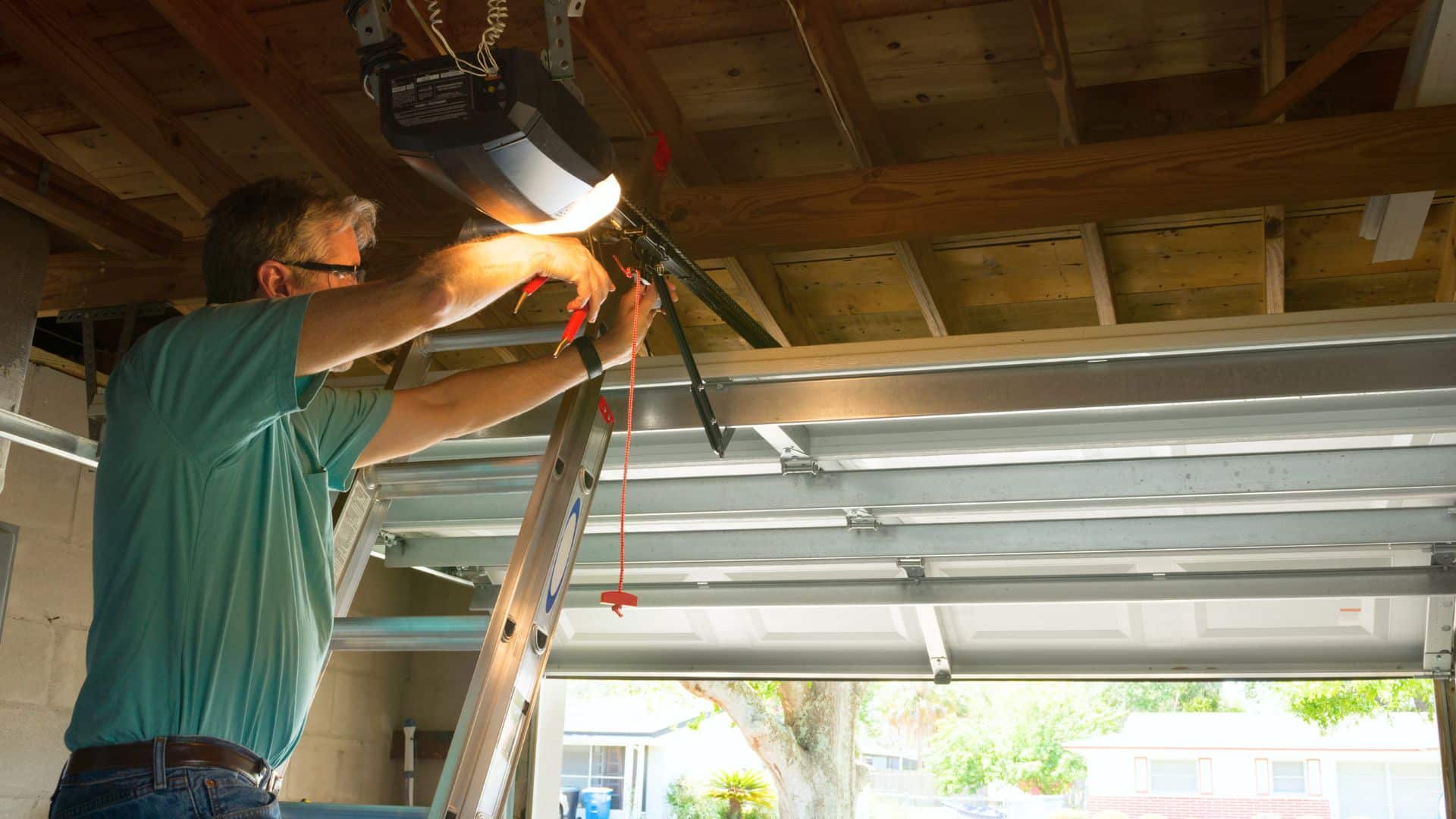
Age is the single most important factor in the repair versus replacement decision. Garage door openers are built to last, but they are not built to last forever. Most residential openers have a functional lifespan of 10 to 15 years under normal use.
Signs that age is becoming a factor:
- The opener is approaching or past the 10-year mark
- Replacement parts are becoming harder to source
- The system lacks modern safety features like auto-reverse and rolling code security
Once an opener crosses the 12 to 15-year threshold, the cost of ongoing repairs begins to approach or exceed the cost of a new unit. At that point, replacement is almost always the more financially sound decision.
What to do: If you do not know your opener’s age, check the label on the motor unit. The manufacture date is usually printed there. If it is not, a technician can identify the model and approximate age during an inspection, and advise whether garage door repair or full replacement makes more sense given the system’s condition and history.
If your opener has been causing recurring problems and you are weighing your options, reading What Happens When You Ignore Garage Door Opener Problems first gives helpful context on what continued delay can cost you beyond just the repair bill.
Calculate How Much You Have Already Spent on Repairs
One service call in three years is not a red flag. Two or three service calls in the past 12 months is a different story. When repairs become frequent, the cumulative cost adds up quickly, and the pattern tells you something important about the condition of the system.
Signs that repair costs are becoming a concern:
- Multiple repairs within a short period of time
- The same component is failing more than once
- Each repair bill brings you closer to the cost of a new opener
A general rule used across the appliance and mechanical service industry is the 50 percent rule. If the cost of a repair reaches 50 percent or more of the cost of a new unit, replacement is typically the better investment. A professional can give you a clear cost comparison during a service visit.
What to do: Keep a simple record of every garage door service call, including what was repaired and what it cost. That history gives you and your technician a clear picture of where the system stands.
Evaluate the Severity of the Current Problem
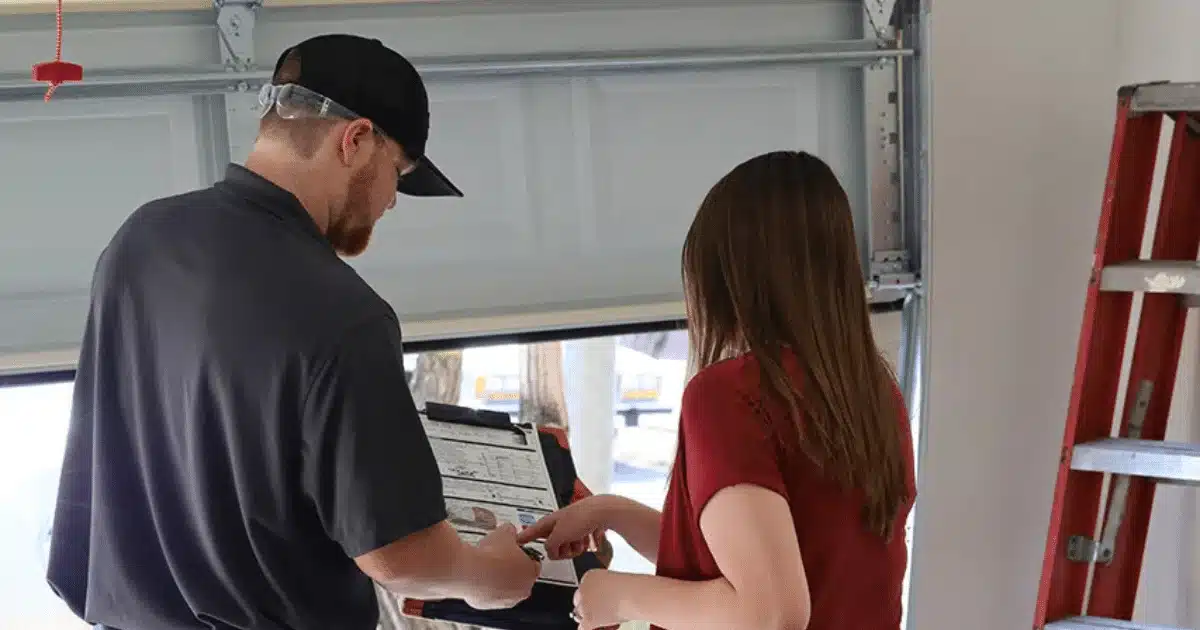
Not every garage door opener problem points toward replacement. Some issues are straightforward repairs that restore the system to full function at a reasonable cost. Others signal a deeper mechanical decline that makes continued repair less practical.
Problems that typically support repair:
- Broken garage door springs on an aging system, whether torsion or extension springs, a break on an older opener often signals the system is nearing the end of its practical life
- Sensor misalignment or obstruction
- Remote or keypad programming failure
- Minor drive system adjustment
- Circuit board replacement on a relatively new unit
Problems that typically support replacement:
- Broken torsion or extension springs on an aging system
- Motor burnout on an opener past its expected lifespan
- Structural damage to the drive rail or trolley carriage
- Repeated failures across multiple components in a short period
What to do: Do not assume the visible symptom tells the whole story. A professional diagnosis gives you an accurate picture of both the immediate problem and the overall condition of the system.
Understanding the full range of what can go wrong helps frame this decision clearly. What Causes a Garage Door Opener to Stop Working? breaks down every common failure point so you know what you are dealing with before a technician arrives.
Look at What Modern Openers Offer That Yours Does Not
Technology in garage door openers has advanced considerably over the past decade. If your current opener is older, there is a meaningful gap between what it offers and what a new system provides. That gap is worth factoring into your decision.
Features available in modern openers that older units lack:
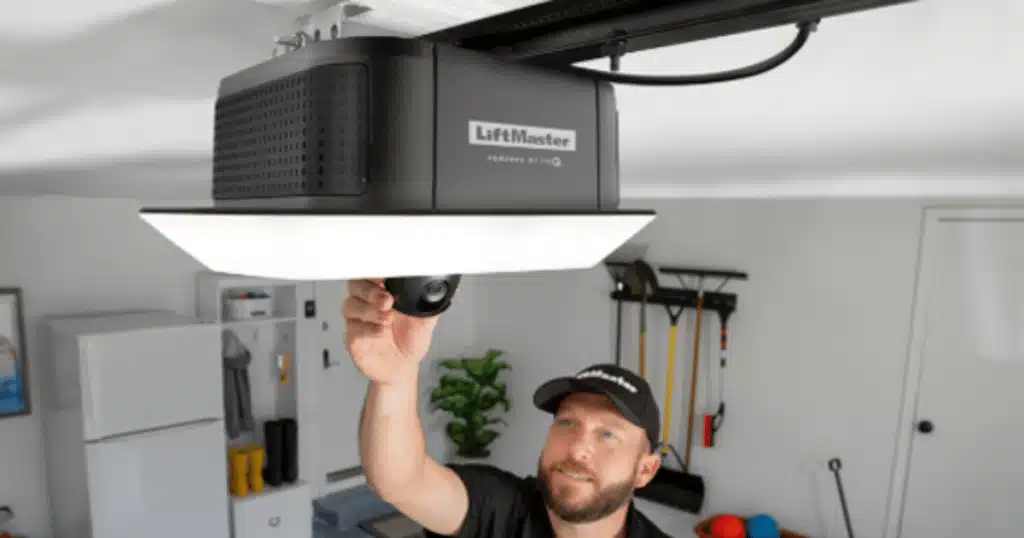
- Smartphone connectivity and remote monitoring
- Battery backup for power outages
- Quieter belt drive systems compared to older chain drives
- Enhanced rolling code security that changes with every use
- Built-in camera and video monitoring on select models
Angi notes that choosing the right garage door opener for your home involves more than just picking a price point, and understanding what modern units offer compared to older systems is a key part of that decision. Industry standards also note that openers manufactured before 1993 may not include the auto-reverse safety feature now required by federal law. If your opener predates this standard, replacement is not just a convenience upgrade. It is a safety necessity.
What to do: Ask your technician to walk you through what a current replacement model would offer compared to your existing unit. The feature comparison often makes the decision straightforward.
Factor In the Condition of the Door Itself
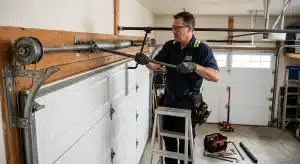
The opener does not work in isolation. It is part of a larger system that includes the door panels, springs, cables, rollers, and tracks. Before deciding whether to repair or replace the opener, it is worth taking a full-system view of the condition the door itself is in.
Signs the door may be adding to the problem:
- Visible panel damage or warping that affects how the door moves
- Worn rollers or hinges are creating extra resistance on the opener motor
- Tracks that are bent, misaligned, or corroded
- Springs that are near the end of their cycle life
If the door itself has significant wear, a new opener on an aging door is only a partial solution. A technician can assess both components together and give you a recommendation that accounts for the full system, not just the opener unit.
Knowing what to look for in a garage door system helps homeowners understand which components wear together and which issues tend to compound over time.
What to do: Request a full system inspection rather than an opener-only evaluation. That broader assessment gives you a more accurate picture of what the right investment looks like.
For a closer look at what that professional evaluation involves, Why You Should Call a Professional for Garage Door Opener Repairs walks through exactly why trained expertise makes such a measurable difference in outcomes.
Think About Energy Efficiency and Operating Costs
Older opener motors are less energy-efficient than current models. While the difference in operating cost per cycle is small, it adds up over time, especially in a household where the garage door is used multiple times each day.
Signs your opener may be less efficient than it should be:
- The motor runs noticeably longer than it should to complete a cycle
- The opener generates significant heat during normal operation
- The unit lacks a standby power mode, drawing full current even when idle
A newer, energy-efficient opener costs less to operate over its lifespan. When weighing repair against replacement on an older unit, this long-term operating cost is a factor worth including in the calculation.
What to do: Ask your technician about the energy rating of your current unit and how it compares to current replacement models. For homeowners planning to stay in their home long-term, the operating cost difference over several years can be meaningful.
Consider Whether the Opener Supports Your Current Lifestyle
How you use your garage has likely changed over the years, and your opener may not be keeping up. For many Oklahoma City homeowners, the garage is more than a place to park. It is a workspace, a storage area, and a primary entry point into the home.
Signs your opener no longer fits your needs:
- No smart home integration when your household relies on connected devices
- No battery backup, leaving you without access during power outages
- A noise level that disrupts the household, especially in homes with attached garages and living spaces above
If your opener is functional but no longer serves your household well, that is a legitimate factor in the replacement decision, separate from repair costs and age alone.
What to do: Before committing to a replacement, discuss your household’s specific needs with a technician. There is a range of current models at different price points, and a professional can match the right system to your situation.
Get a Professional Opinion Before Making the Final Call
The most reliable way to make the repair versus replacement decision is with a professional evaluation in front of you. A trained technician can assess the actual condition of your system, give you a realistic repair cost, and provide a side-by-side comparison with current replacement options.
What a professional evaluation gives you:
- An accurate diagnosis of the current problem
- A clear estimate of what repair will cost and how long it is likely to hold
- A honest assessment of the system’s remaining lifespan
- A replacement recommendation tailored to your home and usage
Trying to make this decision without a professional opinion means relying on incomplete information. The cost of a service call is a small price for the clarity it provides.
What to do: Schedule a professional inspection and ask specifically for a repair versus replacement comparison. A reputable technician will give you both options honestly and let you make the final call with full information.
Make the Right Call With the Right Information
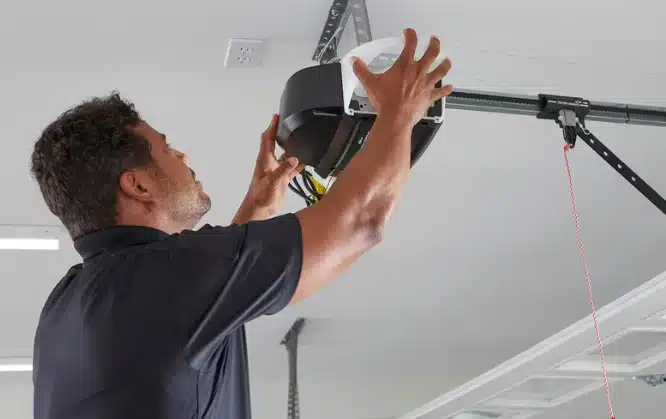
The repair versus replacement decision is not one-size-fits-all. It depends on the age of your system, the nature of the problem, the cost comparison, and how well your current opener is actually serving your household. Getting those factors in front of a qualified technician is the most reliable way to make a decision you will not regret.
Oklahoma City homeowners trust CCM Overhead Doors to deliver honest, professional guidance on exactly these kinds of decisions. Whether your opener needs a targeted repair or it is time for a full upgrade, our team will give you a clear recommendation backed by real expertise. Contact us or give us a call to schedule your inspection and get the answers you need.