
Most homeowners do not think about their garage door remote until it stops working. It gets pressed dozens of times a week, tossed into cup holders, left in hot cars, and rarely given a second thought until something goes wrong. The truth is that a little consistent care goes a long way toward keeping your remote reliable and extending its lifespan well beyond the average.
This guide covers the practical maintenance habits that every Oklahoma City homeowner should follow to avoid the most common remote problems before they start.
Replace the Battery on a Regular Schedule
Waiting until the battery is completely dead before replacing it is one of the most common reasons garage door remotes start behaving unreliably. A battery running low can cause intermittent performance and reduced range long before it fails entirely.
What to Do
- Replace the battery every 12 to 18 months, regardless of whether the remote still appears to be working.
- Use a quality battery from a reputable brand rather than a generic alternative, as low-quality batteries drain faster and can sometimes leak inside the remote.
- When replacing the battery, inspect the contacts for any corrosion or buildup and wipe them clean with a dry cloth if needed.
- Note the date of the last replacement inside the battery compartment cover so you always know when the next change is due.
If your remote is already showing signs of trouble, our guide on Garage Door Remote Not Working? Possible Reasons Why is a helpful starting point for identifying what is going wrong before deciding on your next move.
Store the Remote Properly When Not in Use
Where and how you store your garage door remote has a direct impact on how long it lasts. In garage door repair situations, technicians often find that avoidable storage habits are a major reason remotes fail prematurely. Remotes that are routinely exposed to heat, moisture, or physical stress will degrade faster than those kept with a little more care.
What to Do
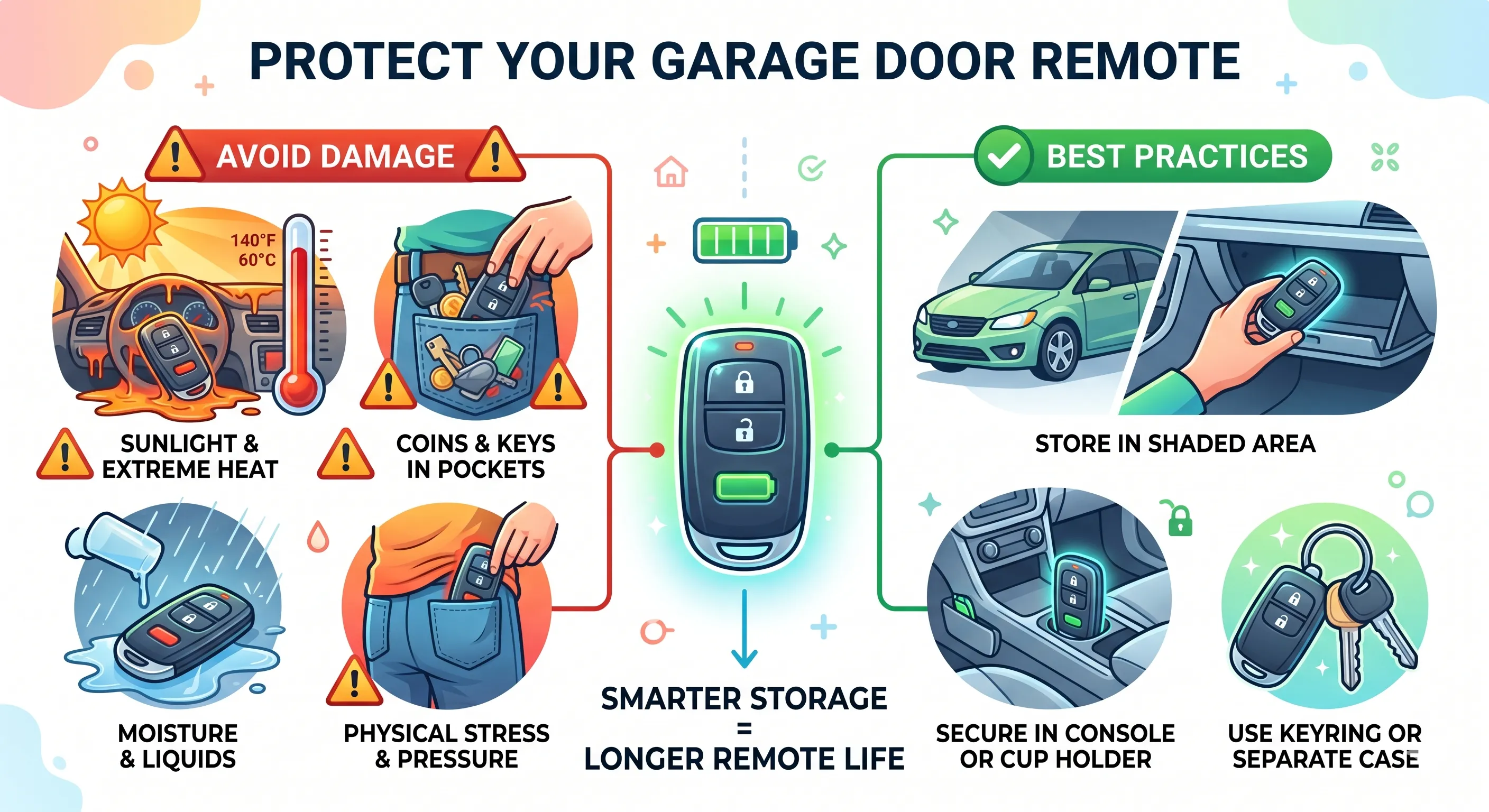
- Avoid leaving the remote on your car dashboard, where it will be exposed to direct sunlight and extreme heat during Oklahoma City summers. Temperatures inside a parked car can reach levels high enough to warp internal components and degrade the battery.
- Store the remote in the center console, glove box, or a shaded area of the vehicle where temperatures are more stable.
- Avoid keeping the remote in a pocket alongside keys or coins, as constant contact and friction can scratch the casing and damage the buttons or internal contacts over time.
Keep the Remote Clean and Free of Debris
Dirt, dust, and grime that accumulate around the buttons and inside the casing can interfere with button responsiveness and eventually cause internal damage. Regular cleaning is a simple habit that takes very little time.
What to Do
- Wipe down the exterior of the remote with a clean, dry cloth regularly to remove dust, fingerprints, and surface grime.
- For buttons that feel sticky or sluggish, use a slightly damp cloth to clean around the button edges. Avoid using excess moisture and never spray any liquid directly onto the remote.
- If debris has worked its way into the gaps around the buttons, use a dry toothbrush or a can of compressed air to dislodge it gently.
- Avoid using harsh cleaning products or solvents directly on the remote casing, as these can damage the plastic and degrade the button labels over time.
Inspect and Maintain the Opener’s Antenna Regularly
The antenna on your garage door opener receives the signal from your remote. Keeping it in good condition is just as important as maintaining the remote itself. A neglected or damaged antenna will reduce the remote’s effective range and cause communication issues that can easily be mistaken for a remote problem.
What to Do
- Check the antenna wire hanging from the motor unit every few months to make sure it is hanging straight and free of obstructions.
- Clear away any boxes, shelving, or stored equipment that may have shifted and are now blocking the antenna’s line of sight toward the garage entrance.
- Inspect the antenna wire for visible damage such as kinks, fraying, or breaks, and contact a garage door opener repair professional if replacement is needed.
Test the Remote’s Range Periodically
Testing the remote’s range every few months gives you an early warning if performance is beginning to decline. Catching a range reduction early allows you to address the cause before it becomes a complete failure.
What to Do
- Stand at the far end of your driveway, approximately 50 to 100 feet from the garage, and press the remote button. The door should respond promptly and consistently from this distance.
- If the remote only responds reliably from closer than 30 feet, begin checking the common causes including battery strength, antenna condition, and potential interference sources.
- Test the remote at different times of day to identify any interference patterns that vary based on nearby wireless device activity.
- A gradual reduction in range over several months is a sign that the remote’s transmitter is weakening and replacement may be approaching.
Protect the Remote From Physical Impact
Garage door remotes are built to be durable but they are not indestructible. Repeated drops, impacts, and rough handling will eventually take a toll on the internal components, even if the casing appears intact from the outside.
What to Do
- Attach the remote to your keychain or keep it in a dedicated spot in your vehicle so it is less likely to be dropped or misplaced.
- Consider using a protective case or sleeve, particularly if you tend to carry it loosely in a bag or pocket where it can get knocked around.
- If the remote is dropped onto a hard surface, check the battery contacts and test performance before assuming everything is fine.
- Store the remote out of reach of children and pets, as both are surprisingly effective at causing damage in ways that are not always immediately obvious.
Keep the Garage Door Sensors Clean and Aligned
The safety sensors at the base of your garage door tracks play an important role in the overall performance of the system. When they are dirty or misaligned, they can cause the opener to behave unexpectedly, which sometimes looks like a remote issue even when the remote itself is functioning perfectly.
What to Do
- Wipe the sensor lenses on both sides of the door tracks with a clean, dry cloth at least once every two to three months.
- Check the indicator lights on both sensors periodically to confirm they are both solid rather than blinking.
- If either light is blinking, gently adjust the sensor bracket until both lights turn solid, confirming the sensors are aligned and communicating correctly.
- Keep the floor area around the sensors clear of debris, tools, and any items that could break the sensor beam and interfere with normal operation.
Avoid Exposing the Remote to Moisture
Water is one of the most damaging things a garage door remote can encounter. Even brief exposure to moisture can cause corrosion on the internal contacts and circuit board, leading to gradual performance decline or sudden failure.
What to Do
- If the remote gets wet, remove the battery immediately and allow the unit to dry completely in a warm, dry location before testing again.
- Avoid keeping the remote in areas of the vehicle where it could be exposed to condensation, rain through an open window, or spills.
- Inspect the battery compartment every few months for any signs of moisture intrusion, including white residue or corrosion on the contacts.
- A remote that has been significantly water damaged more than once is unlikely to remain reliable and should be assessed for replacement.
For a full breakdown of when replacement makes more sense than continued care, our guide on Signs It’s Time to Replace Your Garage Door Remote covers every warning sign in detail.
Re-Sync the Remote After Any Power Outage
Power outages are a fact of life for Oklahoma City homeowners, particularly during storm season. After any outage or opener reset, your remote may lose its programming and need to be re-paired to the opener. Knowing how to do this quickly keeps disruptions to a minimum.
What to Do
- After any power outage, test the remote as soon as power is restored to confirm it is still paired to the opener.
- If the remote is not responding, use the “Learn” button on the motor unit to re-pair it. Most openers complete this process in under a minute.
- Keep your opener manual in an accessible location so you can reference the correct re-pairing steps for your specific model without delay.
- If you have multiple remotes or a keypad, re-sync all of them at the same time to avoid discovering another unpaired device later.
After any power outage or opener reset, it is also a good time to run through the broader DASMA garage door safety tips to confirm that all system components, not just the remote, are functioning correctly before resuming regular use.
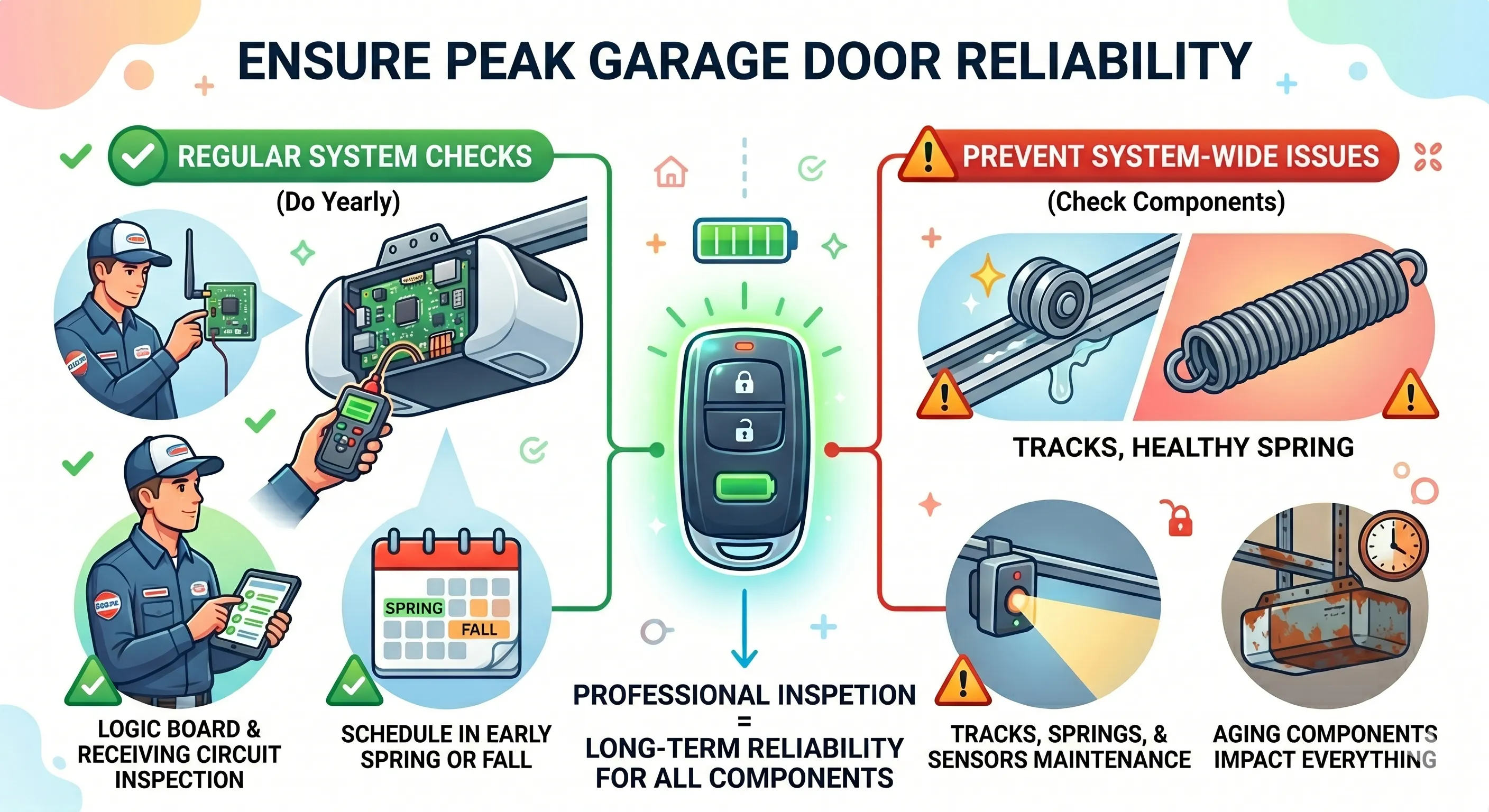
Schedule Annual Professional Inspections for the Full System
Maintaining the remote itself is only one part of keeping your garage door system running reliably. The opener, tracks, springs, and sensors all work together, and a problem developing in any one component can eventually affect remote performance and overall system behavior.
What to Do
- Schedule a professional garage door inspection at least once a year to catch any developing issues before they become larger problems.
- Ask the technician to check the opener’s logic board, antenna, and receiving circuit as part of the inspection, particularly if the remote has been showing any inconsistent performance.
- Oklahoma City homeowners should consider scheduling inspections in early spring before storm season or in early fall before temperatures drop.
- If your system is more than ten years old, annual inspections become even more important as aging components are more likely to develop issues that affect both the remote and opener together.
If you ever need to work through a problem between scheduled inspections, our guide on How to Troubleshoot a Garage Door Remote at Home is a practical resource to keep on hand.
Annual inspections are most effective when homeowners already have a clear understanding of what proper upkeep involves, and the IDA garage door care and maintenance guidelines offer a comprehensive framework for what technicians check and what homeowners can manage on their own between visits.
A Little Maintenance Goes a Long Way
Garage door remote problems rarely appear out of nowhere. In most cases, they develop gradually due to small habits that are easy to change and everyday conditions that can be managed with regular attention. Homeowners who experience the fewest disruptions are those who treat their garage door system as part of routine home maintenance rather than something to address only when it stops working.
CCM Overhead Doors encourages Oklahoma City homeowners to stay ahead of issues before they turn into costly repairs or inconvenient breakdowns. Building these maintenance habits now leads to fewer surprises, longer-lasting equipment, and a garage door system that performs reliably through every season. When you’re ready for a professional inspection, tune-up, or help selecting the right remote for your opener, contact us or give us a call to schedule your appointment.