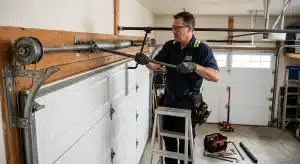
A garage door slams shut when the counterbalance system fails, and the door’s weight is no longer supported during closing. This sudden drop is one of the most serious garage door problems because it signals internal hardware failure that requires professional garage door repair.
When this happens, critical components such as garage door springs, cables, drums, and brackets may be damaged or completely broken. Understanding which parts fail and how they interact inside the garage door system helps homeowners in Oklahoma City recognize the urgency before further structural damage or safety risks develop.
Why Can a Garage Door Slam Shut Without Warning?
A garage door slams shut when the door’s counterbalance system can’t manage the door’s weight during closing, allowing the force of gravity to overpower the lift support and drive a sudden drop.
Common reasons this can happen without warning include:
- The garage door’s spring system loses stored potential energy and can’t counterbalance the door’s weight.
- A broken spring or a slipping drum shifts the lift support across the sides of the door, creating uneven tension.
- Lift cables unwind, fray, or lose tension, causing one side to drop faster than the other.
- Bearings, rollers, and track contact points generate friction until the system abruptly releases under high tension.
- Brackets or fasteners loosen and misalign, allowing the door to bind and then drop hard.
These warning patterns and why they signal urgent risk are explained in our blog on Garage Door Slams Shut: What It Means and Why It’s Urgent, which breaks down how counterbalance failure and sudden hardware release can trigger a dangerous drop.

Parts That Fail When a Garage Door Slams When Closing
Torsion Springs That Lose Lift Support
Torsion springs can lose counterbalance strength, letting the door’s weight overpower controlled closing and drop fast.
Warning signals often include:
- A loud snap near the header area.
- A visible gap is forming between coils.
- Heavier door opening that feels abrupt or strained.
- Uneven travel across the sides of the door.
- A hard drop that turns normal movement into slamming.
The garage door safety tips from DASMA explain that worn springs and coil separation can throw the system out of balance, increase door weight during operation, and raise the risk of a sudden drop during closing.
Extension Springs That Snap or Stretch Out
Extension springs can weaken or break along the horizontal tracks, reducing lift support and changing closing behavior.
Movement changes often show up as:
- One side sits lower than the other at rest.
- Coils appear stretched out after the operation.
- Rust and corrosion buildup along the spring body.
- Jerky travel as friction rises near the track path.
- A sharper drop near the end of closing.
Extension wear shifts the balance, increasing the likelihood of a fast drop as the door lowers through travel.
Cable Drums That Slip or Lose Cable Wrap
Cable drums can slip on the torsion tube, shifting the load and pulling the door out of level.
Signs tied to drum trouble can include:
- Tilted travel where one side leads the other.
- Cable wrap riding up or down the grooves.
- A sudden jerk as tension changes near the top.
- Scraping near the end bearing area.
- Uneven gaps between the door edge and track.
Ongoing slip at the drums often signals broader balance instability, so scheduling garage door service can help confirm whether tension loss is spreading to cables, bearings, or track guidance.
Lift Cables That Fray, Unwind, or Break
Lift cables can degrade over time, removing support on one side and destabilizing the closing cycle.
Clues that often point to cable damage include:
- Frayed strands near the lower attachment points.
- Rust indicates corrosion exposure.
- Slack line hanging beside the track path.
- A lean toward one side during travel.
- Rough movement that strains hinges and rollers.
IDA recommends monthly visual inspections of cables for fraying and rust, noting that worn lift lines can create imbalance, strain hardware, and lead to unstable closing if not serviced by a trained technician.
Bottom Brackets That Take the Highest Load
Bottom brackets can distort under high tension, shifting cable pull angles and destabilizing door alignment quickly.
Bracket-related red flags may include:
- Bent plates at the lower corners of the door sections.
- Loose mounting bolts along the side of the door.
- Elongated bolt holes from repeated strain.
- Twisted attachment points change the pull angle.
- Sudden alignment shifts followed by a hard drop.
Bracket damage alters load transfer, increasing the likelihood of a sudden drop as the door lowers under its own weight.
Center Bearing Plate That Binds Under Tension
A center bearing plate can bind under load, adding friction and disrupting smooth torsion shaft rotation.
Binding often shows up as:
- Grinding near the center header line during closing.
- Shaft vibration that builds as the door moves.
- Uneven tension across the spring system.
- Sticky movement followed by a sudden release.
- Increased strain on the opener and drive system.
Binding and release suddenly remove resistance, increasing the likelihood of a sharp drop during closing under strain.
End Bearings That Wear and Create Drag
End bearings can wear out and create drag, reducing smooth rotation and affecting balance through travel.
Wear patterns commonly include:
- Squealing near the ends of the torsion tube.
- Rust buildup around bearing housings.
- Uneven lift, with one side leading the other.
- Rough travel that worsens alignment through the opening.
- Faster closing once the counterbalance becomes inconsistent.
Clopay notes that squeaking or grinding noises often come from friction and misalignment in moving hardware, which matches the squeal, rough travel, and drag patterns that show up when end bearings wear and disrupt smooth rotation.
Rollers That Jam After a Hard Close
Worn bearings or bent stems can increase friction in the track path and disrupt smooth guidance.
Signs that guidance is no longer smooth include:
- Grinding replaces the normal rolling sound.
- Wobble along the wheel path that signals bearing wear.
- Bent stems near hinge attachment points.
- Bright scuff marks along the track surface.
- Sticking that release suddenly into a harder drop.
Higher track friction increases strain on connected hardware, increasing the likelihood of another hard close during use.
Hinges That Bend at the Section Joints
Hinges can bend at section joints, shifting panel control and increasing binding during closing movement.
Common indicators include:
- Bent hinge leaves near pivot points.
- Screws are pulling away from the door sections.
- Panel seams are separating under load.
- Popping sounds as sections enter the curve.
- Uneven folding that shifts the load into guidance points.
Hinge deformation increases binding and misalignment, increasing the likelihood of a hard drop as the door lowers.
Tracks and Fasteners That Shift Out of Alignment
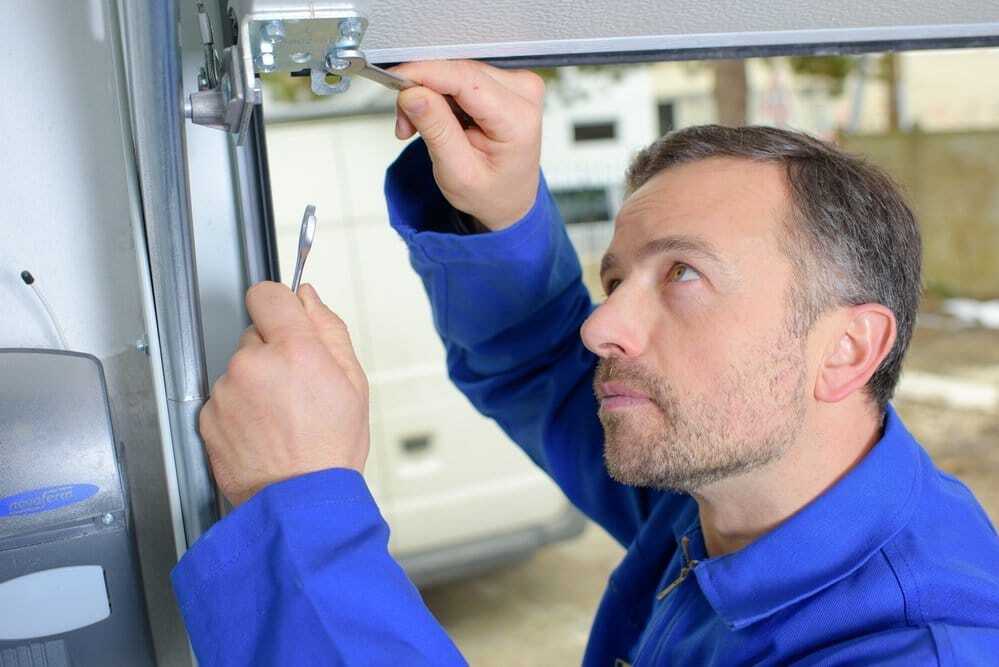
Tracks and fasteners can shift over time, creating binding that releases suddenly and speeds up closing.
Alignment drift often appears as:
- Gaps between the track and the wall at mounting points.
- Loose brackets or lag bolts pulling away from framing.
- Bends near the curve into the horizontal tracks.
- Heavy rubbing on one side during travel.
- Sudden acceleration after resistance breaks free.
Local conditions can speed up track shift and hardware loosening, and our blog on What Causes a Garage Door to Slam Shut in Oklahoma City? explains how that leads to binding and sudden release during closing.
When a Garage Door Slams Shut, the Failure Chain Usually Follows a Pattern
When a garage door slams shut, the cause is often a chain reaction in which a weak part shifts the load to the next part until controlled closing fails.
- Spring fatigue reduces counterbalance and increases the door’s weight on the system.
- Uneven tension develops along the sides of the door, causing the door to track unevenly.
- The cable wrap begins to slip on the drum, creating slack and imbalance.
- Bearings and guidance points add friction, then release suddenly under high tension.
- Brackets or fasteners shift, causing the door to go out of alignment during travel.
- Gravity takes over, and the door drops faster than intended, creating a slam.
Understanding this pattern explains why the first failure rarely stays isolated and why delayed service often results in more damaged parts.
Garage Door Closes Too Fast and What It Indicates About Hardware
A garage door closes too fast when the counterbalance can’t control its speed, which usually indicates hardware that is losing lift support or stability under load.
- Spring tension has weakened, reducing control over the door’s weight during closing.
- Cable tension is uneven, allowing one side to lead and speed up the drop.
- Drums are slipping or losing a clean wrap, so lift support changes mid-cycle.
- Bearing drag increases friction, then suddenly releases as the door moves.
- Track alignment has shifted, creating a binding that breaks free and accelerates travel.
- Opener settings are no longer aligned with the door’s actual balance, causing instability as the cycle finishes.
Speed changes are an early warning that key parts are no longer working together, so professional inspection is often needed before the issue escalates into a hard slam.
Secondary Damage That Can Follow a Garage Door Slam Shut
A garage door slams shut with enough force to transfer stress into multiple parts, so damage often spreads beyond the original failure point.
- Door sections can crack or bend at seams, creating a broken garage door condition that worsens with each cycle.
- Hinges and brackets can deform under impact, shifting alignment and increasing friction during travel.
- Rollers can seize or wobble, causing rough movement through the horizontal tracks and vertical runs.
- Tracks can pull away from mounting points, leading to rubbing on one side and unstable closing.
- The garage door opener can strain or mis-track, especially if it is forced to support the door’s weight without a counterbalance.
- The emergency release cord and related hardware can be stressed during sudden movement or forced stops.
Secondary damage often increases the scope of repairs and safety risks, which is why a full inspection is essential after any slam event.
Why a Garage Door Slam Shut Is Urgent for Safety and Property Protection
A garage door slams shut with enough force to create an immediate safety risk and fast property damage, especially when the door’s counterbalance system can no longer control the door’s weight during closing.
- Pinch and crush zones around hinges, brackets, and the sides of the door become more dangerous during sudden closing.
- Impact force can damage vehicles, flooring, framing, and stored items near the opening.
- Misalignment can worsen quickly, increasing friction and making the next cycle more unstable.
- Hardware under high tension can fail again without warning, increasing the risk of repeated drops.
- Opener controls can be overwhelmed when the door opener is forced to handle too much load.
Practical homeowner steps after a slam event are covered in our blog on What Should You Do If a Garage Door Slams Shut?, which explains how to reduce risk, protect the area, and communicate the right symptoms before scheduling service.
What a Professional Inspection Checks After a Garage Door Slams Shut
Professional evaluation centers on identifying failed load-bearing parts and confirming whether the counterbalance continues to control the door’s weight during closing.
- Springs are checked for wear, coil separation, and loss of balance.
- Cables are reviewed for fraying, rust, slack, and uneven tension.
- Drums are evaluated for slipping, poor wrap, and alignment issues.
- Brackets, hinges, and rollers are inspected for bending, looseness, and friction.
- Tracks and mounts are checked for shift, rubbing, and guidance problems.
- Opener settings are reviewed to confirm the opener is not compensating for mechanical failure.
When opener strain or control behavior is part of the symptom set, a targeted garage door opener repair evaluation helps confirm whether settings are compensating for a mechanical imbalance.
Repair Scope and Service Planning for a Garage Door That Slams Shut
Service planning focuses on the failed parts and the related damage created during closing, so repair decisions match the true cause.
- Springs are evaluated for balance and replacement needs.
- Cables and drums are reviewed together for tension and wrap issues.
- Brackets, bearings, rollers, and hinges are checked for stress and friction.
- Tracks and mounts are inspected for shift, rubbing, and stability.
- Opener settings have been verified, so the system is not compensating for imbalance.
- Average cost may depend on door size, spring type, parts availability, and secondary damage.
Spring fatigue is often part of the repair scope, and broken garage door spring service restores the counterbalance, supporting stable, controlled closing.
Schedule a Safety Inspection for the Parts That Make a Garage Door Slam Shut
A garage door slams shut when the key counterbalance and guidance parts stop controlling the door’s weight during closing. Early action helps reduce safety risk, limit property damage, and keep repair needs from spreading to additional hardware.
CCM Overhead Doors supports homeowners in Oklahoma City with accurate diagnosis and dependable repairs when a garage door slams shut. Contact us or give us a call today to schedule an inspection that confirms the failed parts and restores safe, controlled closing.