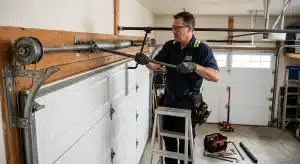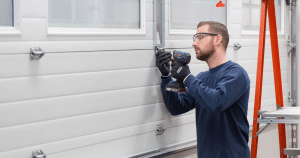
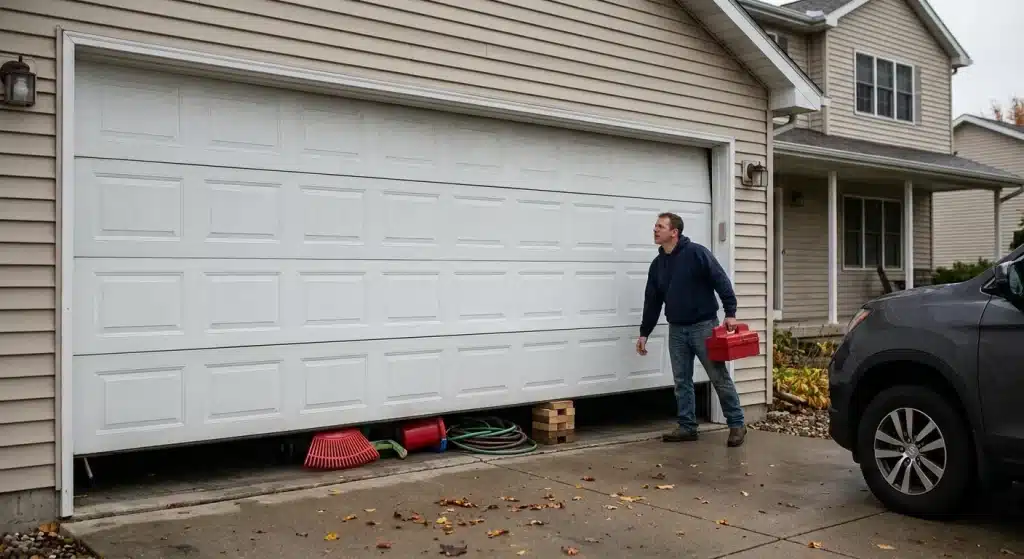
A garage door stops working when a spring breaks because the door loses the counterbalance that carries most of its weight. Without that support, the opener motor is suddenly asked to lift the full door weight on its own, something it isn’t built to do, so it stalls, grinds, or shuts off completely.
The door may also become too heavy to lift by hand, move unevenly, or refuse to budge. Recognizing the early signs of broken garage door springs, rather than continuing to press the opener button, keeps a small problem from turning into a bigger repair.
Key Takeaways
- A broken spring removes the counterbalance that lets the opener lift the door, causing it to stall or stop.
- Springs typically fail from normal wear, rust, or lack of maintenance after thousands of cycles.
- A loud bang, uneven movement, or a door that suddenly feels heavier are the clearest warning signs.
- Continuing to operate the door or opener after a break risks damaging the motor, cables, and tracks.
- The safest first step is to stop using the door and disconnect the opener until a technician arrives.
- Professional garage door service is strongly recommended over DIY, given how much tension the springs carry.
What Changes Once a Spring Breaks
Aspect | Normal Operation | After a Spring Breaks |
Door weight by hand | Light, easy to lift | Very heavy, hard or impossible to lift |
Opener effort | Smooth, minimal strain | Motor strains, may stall or shut off |
Sound | Quiet, even movement | Loud bang at failure, grinding afterward |
Door movement | Even on both sides | Uneven, crooked, or stuck partway |
Cables and tracks | Under normal, balanced load | Taking on stress they weren’t built for |
The Importance of Garage Door Springs in Daily Use
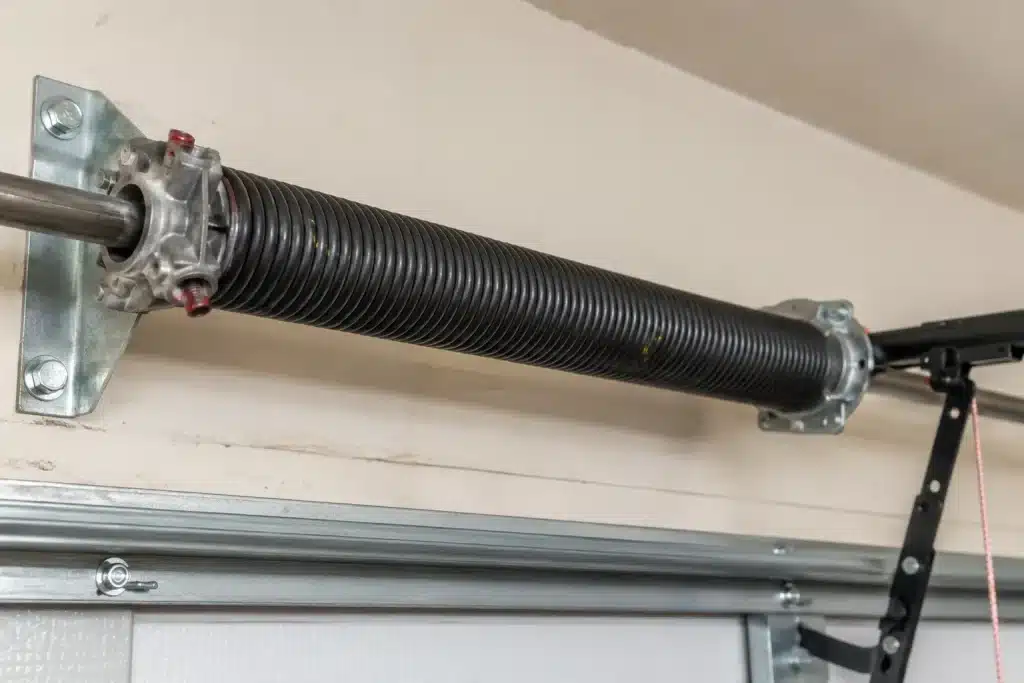
The garage door system relies on properly functioning springs to raise and lower the door safely and smoothly. These components support the full weight of the door during every cycle, which is why a small mechanical failure can bring the system to a stop.
Springs often break due to normal wear, rust buildup, or a lack of maintenance over time. Addressing these issues quickly reduces the risk of further damage and helps restore reliable performance, and in most cases, professional repair is required to keep the system properly balanced.
For a closer look at just how disruptive a full spring failure can be, read What Happens When a Garage Door Spring Breaks and Why It’s a Big Deal?
What Garage Door Springs Do for Homeowners
Garage door springs do most of the heavy lifting when the door opens or closes, which is what makes the door feel light enough to move by hand or by opener. They’re coiled tightly to resist gravity and support the door’s weight. See how a single broken spring can place stress on multiple components and disrupt your entire system by reading How a Broken Garage Door Spring Can Wreak Havoc on Your Entire System.
Why the Opener Motor Struggles Once a Spring Fails
If the springs stop working, the opener motor has to try lifting the full door weight on its own. It isn’t built for that job, and pushing it to try can burn the motor out quickly. This is one of the most common ways a simple spring problem turns into an expensive opener replacement, since the door kept getting used after the spring had already failed.
Common Types of Garage Door Springs in Oklahoma City
Most residential and commercial sectional doors use one of two spring systems, and the type depends on your door’s size, weight, and age. Torsion springs are known for their durability and are often used on heavier doors, while extension springs are typically found on lighter doors. Both need to be fully functional for the door to work correctly.
If you’re considering the replacement yourself once you know your type, Insider Tricks: How to Replace Garage Door Spring and Save Big covers the steps and tools for both.
Signs Your Garage Door Spring Is Failing
Knowing the early warning signs of spring failure helps you address the problem before it worsens. A failing spring can show itself through sound, visible damage, or how the door physically behaves.
Unusual Noises and Changes in Operation
A loud bang, often compared to a firecracker, is one of the clearest signs a spring has broken. This noise happens because the high-tension spring snaps, releasing a large amount of stored energy all at once. Even if the door wasn’t moving at the time, that noise alone means the system needs attention right away.
Other changes worth watching for include grinding or squeaking sounds during operation, jerky or uneven movement, and an opener that visibly struggles to lift the door. For a broader rundown of what different noises and behaviors typically mean, The Spruce’s guide to troubleshooting common garage door problems covers many of the same warning signs homeowners run into before a full spring failure.
Visible Damage and Balance Issues with Your Garage Door
A visual inspection can often catch a problem before you hear a loud noise. On a torsion spring, a visible gap in the coil means it has snapped in two. Rust on the coils also weakens the metal and makes it more likely to fail under pressure.
How the door moves is another indicator. A spring that’s losing its ability to support the door’s weight will cause the door to feel unbalanced, move unevenly, or appear crooked as it opens. You can check this by disconnecting the opener and lifting the door halfway by hand; if it slams shut or is very hard to lift, the spring isn’t providing enough support. If that’s what you’re seeing, Need Garage Door Spring Replacement? Quality Service Guaranteed in Oklahoma City, OK covers our full range of spring services.
What to Do When a Garage Door Spring Breaks
The first priority when you discover a broken spring is making sure everyone in the home stays safe. A garage door with a broken spring is unsteady, since the door’s full weight is no longer supported, and using it in that state risks injury. Understand how spring failure turns a smoothly operating door into heavy, hard-to-manage equipment by reading From Smooth Lift to Dead Weight: How Spring Failure Affects Daily Use.
Immediate Safety Steps to Take
Springs hold significant tension, and once one breaks, the door loses the safety margin that tension normally provides. The most important step is to stop trying to open or close the door, by hand or with the opener.
- Do not try to use the garage door opener.
- Do not attempt to lift the garage door by hand.
- Keep cars, kids, and pets away from the door.
- Unplug the garage door opener from the wall socket.
Continuing to use the door risks it falling fast and hard, which can damage the opener, tracks, or injure anyone nearby. Motor strain is a real concern here too; for more detail on how openers are designed to handle load and where that design breaks down under a failed spring, DASMA’s safety guidance on garage door openers explains the mechanical limits involved.
Why Professional Help Matters for Spring Replacement
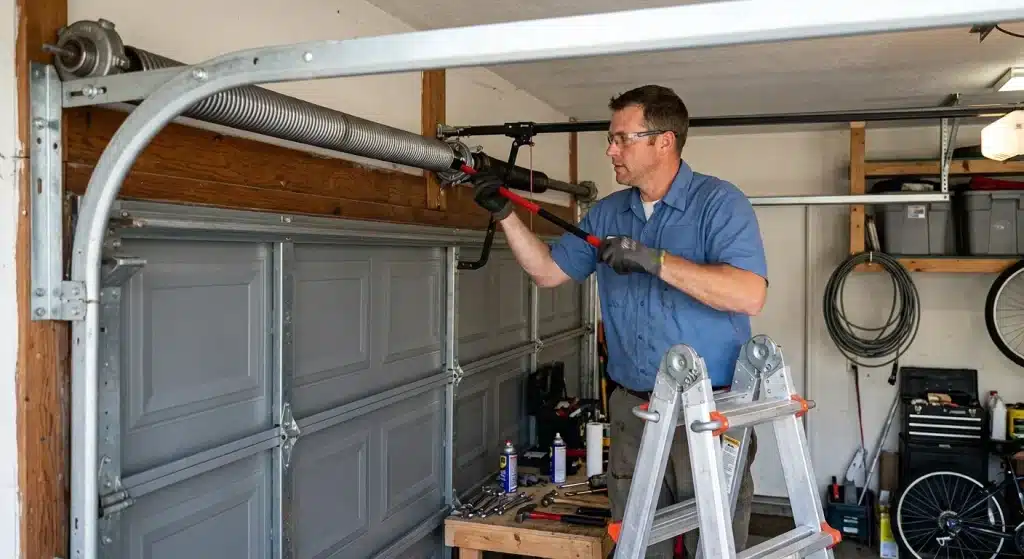
Spring replacement isn’t a task to take on without the right tools and experience, since the springs are under significant tension. If removed or installed incorrectly, that stored force can cause a spring or other part to release suddenly, injuring someone or damaging your home.
Professional technicians have the tools and training to perform the replacement safely, and know how to match the right spring, extension, or torsion to your door’s weight and size. That combination of proper tools, correct parts, and safe installation keeps the repair from becoming a bigger problem.
If you’re weighing the cost of hiring a professional against doing it yourself, read How Much Does It Cost to Replace a Garage Door Spring? for real pricing.
Proactive Garage Door Service
Understanding how garage door springs support daily operation makes it easier to catch problems early, before a full failure leaves the door stuck or unsafe to use. Watching for unusual noises, uneven movement, or visible spring damage gives you a window to schedule service before an emergency call becomes necessary.
CCM Overhead Doors provides expert solutions for spring repair and full garage door maintenance across the Oklahoma City area. Technicians diagnose the issue on-site and install properly rated replacement springs matched to your door’s exact specifications, rather than a generic, one-size-fits-all part. Most repairs are completed in a single visit, so you’re not left waiting days with a door that won’t open. Contact us or give us a call to schedule your repair today and get your garage door working safely again.