
A garage door slams shut when the counterbalance system can’t control the door’s weight, often tied to spring or cable lift failure. Professional garage door repair is usually required to restore controlled movement and prevent repeat drop events.
In Oklahoma City, OK, heat, humidity, and heavy daily cycling can speed up wear on springs, cables, rollers, and track hardware. This guide explains what to do right away, why the situation is urgent, and what a technician will inspect to correct the root issue.
Is a Sudden Door Drop an Emergency Situation?
A garage door slams shut when the lift support fails, and the door’s weight drops under gravity, leaving the garage door system unstable and increasing the risk of serious injury or property damage if the door is operated again before professional service.
Common warning signs that point to a serious failure include:
- The door drops faster than normal during closing and feels like it’s falling rather than lowering smoothly.
- The door sits unevenly, with one side lower than the other after the slam.
- A loud snap or bang comes from the spring system, followed by heavy movement or limited travel.
- The opener strains, stalls, or stops mid-cycle due to abnormal resistance.
- Slack, frayed, or displaced cables appear near the sides of the door, suggesting uneven lift support.
If these warning signs match what happened, the full safety explanation and the urgency behind them are covered in our blog on Garage Door Slams Shut: What It Means and Why It’s Urgent, where the sudden-drop symptoms are directly linked to lift-system failures that professionals evaluate first.

What To Do When a Garage Door Slams Shut
Stop Using the Door and Secure the Area
Stopping the operation right away reduces the risk of another drop and limits the chance of another drop after a garage door slams shut.
Immediate safety priorities include:
- Clear the opening so no one stands under the door’s weight.
- Move vehicles back to reduce exposure to property damage if slamming happens again.
- Keep your hands away from hinges, brackets, and rollers where pinch points form fast.
- Stay off the side of your garage door where the shifting load can suddenly pull you in.
- Treat the area as unsafe until an expert inspects the spring system and cables.
The Federal Register safety standard explains entrapment protection during closing cycles, including support for shutdown and clearance after a garage door slams shut.
Restrict Access and Treat the Door as Unsafe Until Inspected
Limiting access prevents accidental activation and prevents the opener from exerting excessive force on damaged metal components and lift hardware.
Access-control safeguards to apply include:
- Store remotes out of reach and disable keypad entry to prevent surprise cycles.
- Notify household members that the door is temporarily off-limits for safety.
- Avoid pulling the emergency release cord if the door looks crooked or heavy.
- Leave force settings and opener settings unchanged until the lift issue is corrected.
- Keep fingers away from cables and bottom brackets where high tension can remain.
Keeping access restricted reduces the risk of accidental activation and helps prevent added damage until a technician can inspect the lift system and restore controlled operation.
Capture Key Details to Share With the Technician
Clear symptom notes help narrow possible reasons fast when slamming follows uneven closing, sudden noise, or visible lift imbalance.
Key details worth noting include:
- A loud bang that may indicate a garage door spring break event.
- A door that sits unevenly, with one side of the door lower after the slam.
- Slack or frayed cables on the sides of the door suggest uneven lift support.
- Opener strain, loose chains, or stalling that hint at excessive force demand.
- Rubbing or binding along the horizontal tracks can cause the garage door to slam.
Accurate timing and visible symptoms help a technician determine whether the fault involves torsion springs, extension springs, cable routing, or a broken spring.
Schedule Professional Service and Request a Full Safety Inspection
Professional service matters because the garage door’s spring system stores potential energy, and failures can pose a serious risk of injury.
Inspection coverage to request includes:
- Spring condition across garage door springs, including coils and torsion hardware.
- Cable routing and drum wrap to ensure the door’s weight lifts evenly on both sides.
- Roller and hinge wear that increases friction and can worsen slamming behavior.
- Track alignment checks to prevent repeat garage door slams during closing cycles.
- Opener evaluation so opener’s force settings match restored counterbalance support.
Full-system inspection reduces repeat slamming of garage doors by addressing balance, wear points, and opener limits together rather than isolating one part.
If the Door Is Stuck Open, Focus on Security Without Forcing Movement
Security can be handled safely while waiting for service, since forcing a close can shift load onto unstable hardware and worsen damage.
Security-first actions to consider include:
- Move valuables away from the opening and use alternate entry points temporarily.
- Keep vehicles outside until a technician restores controlled closing.
- Avoid propping the door, since the door’s weight can shift without warning.
- Do not attempt manual lowering if a garage door cable snapped or a spring looks damaged.
- Maintain distance from pulleys, brackets, and cables where high tension may remain.
Chamberlain Group notes that a heavy or rapidly dropping door can signal a spring issue, so manual operation should be stopped and professional service scheduled.
Why a Garage Door Closes Too Fast Signals Loss of Control
A garage door closes too fast when the counterbalance can’t handle the door’s weight, often indicating a spring or cable lift failure that makes the closing cycle unsafe.
Performance changes that indicate counterbalance failure include:
- Closing speed increases suddenly, and the door feels like it drops instead of lowering smoothly.
- One side descends faster, creating a crooked or racked position near the floor.
- The opener strains or sounds overloaded as the door pulls against the drive.
- Cables appear slack, uneven, or poorly seated along the sides during travel.
- Movement becomes jerky as rollers bind, and track alignment halts the smooth descent.
Professional service is recommended because uncontrolled closing can escalate into a slam event and add system damage.
Safety Risks That Increase After a Slam Event
A slam event can leave the lift system unstable, increasing safety risks because the door’s weight may shift suddenly, and damaged hardware can fail without warning.
Post-slam hazards that can escalate quickly include:
- Another sudden drop can occur during the next closing cycle.
- Pinch-point exposure near hinges, brackets, and rollers as parts shift out of alignment.
- Property damage risk if the door slams into a vehicle or stored items near the opening.
- Track and roller failures when friction and binding increase along the travel path.
- Opener strain and drive wear when the motor fights an unbalanced door.
Keeping the area clear and scheduling professional garage door service promptly helps reduce the risk of injury, prevent additional hardware failure, and stabilize the lift system after a slam incident.
What a Technician Will Inspect and Test on Arrival
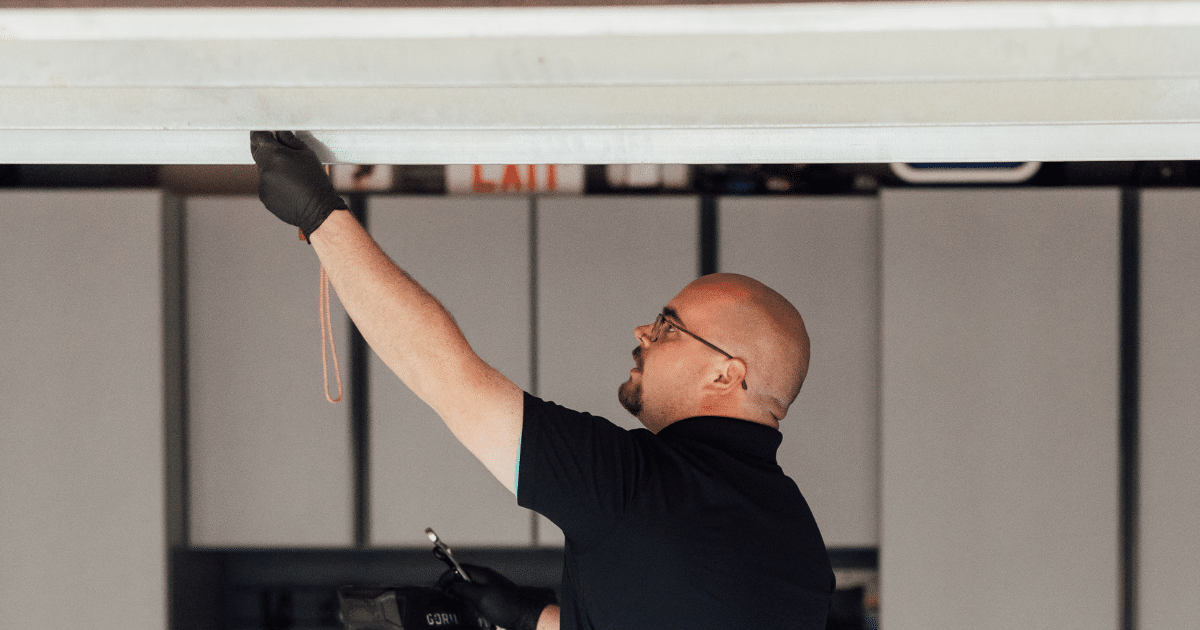
Professional inspection focuses on restoring safe control by identifying which lift, track, and opener conditions allowed the door to drop hard in the first place.
Critical diagnostic checkpoints during professional inspection include:
- Spring condition across the spring system, including torsion coils and mounting points.
- Cable routing and drum wrap to confirm even lift support on both sides of the door.
- Roller wear, hinge movement, and friction areas can cause binding and uneven travel.
- Track alignment along the horizontal tracks to prevent racking and repeated slamming.
- Opener load review, including travel limits and opener’s force settings after balance is restored.
Inspection findings often reveal a specific failed component within the lift system, and our blog on Which Parts Fail When a Garage Door Slams Shut? explains which hardware most commonly breaks down and how each symptom connects to spring, cable, or track failure.
When the Signs Point to a Broken Garage Door Spring
A broken garage door spring often explains why lift support disappears, and the door’s weight becomes difficult to control during opening and closing cycles.
Spring failure indicators technicians commonly verify include:
- A loud bang near the spring system was followed by heavy, unstable door movement.
- The door feels unusually heavy or will not lift smoothly from the floor.
- The door drops quickly during closing or becomes difficult for the opener to control.
- A visible gap appears in the coil of the torsion spring near the center mount.
- The door sits unevenly, suggesting that the spring system is no longer balancing the two sides.
Spring failure is treated as urgent because compromised lift support can trigger repeat slam events, and professional repair of broken garage door springs restores proper counterbalance and controlled movement.
What It Often Means When the Garage Door Cable Snapped
A garage door cable snapped situation often means the door has lost balanced lift support, which can cause crooked travel, sudden drops, and added strain on the spring system.
Cable failure symptoms that signal uneven lift support include:
- The door hangs unevenly, with one side lower and the other side binding in the track.
- A cable appears loose, frayed, or off the drum near the top corners.
- The door starts to move, then jams or drops during closing.
- A loud snap is followed by scraping sounds as the door shifts out of alignment.
- Rollers pull tight on one side as the door twists under an uneven load.
Cable issues require urgent professional service because an uneven lift can trigger another slam event and damage tracks, rollers, and the opener.
Repair Urgency and Downtime Expectations
Delaying service after a garage door slams shut can increase safety risks and cause further damage beyond the original lift failure.
Service timeline and repair complexity factors include:
- The type of spring system installed (torsion or extension).
- The extent of damage to cables, pulleys, and brackets.
- Track alignment issues or roller wear that developed during the slam event.
- Strain is placed on the garage door opener and related drive components.
- Availability of matching replacement parts for the specific door model.
If opener strain or drive wear is discovered during evaluation, timely garage door opener repair can prevent further mechanical damage and shorten overall downtime.
How to Reduce the Risk of Another Garage Door Slam Event
Preventing another garage door slams shut incident requires restoring proper counterbalance, maintaining lift hardware, and ensuring the opener is not compensating for worn mechanical parts.
Preventive service actions that help stabilize the lift system include:
- Scheduling routine garage door maintenance to monitor spring tension and cable condition.
- Replace worn garage door springs before cycle fatigue leads to sudden failure.
- Checking rollers, hinges, and horizontal tracks for alignment shifts and friction buildup.
- Confirming the opener’s force settings match the restored counterbalance system.
- Addressing rust and corrosion on metal components that weaken structural support.
Long-term prevention strategies are fully outlined in our blog on What Causes a Garage Door to Slam Shut in Oklahoma City?, which explains the most common local failure triggers and why addressing them early helps reduce repeat slam events.
Act Immediately If Your Garage Door Slams Shut in Oklahoma City
A garage door slams shut when the counterbalance system fails to control the door’s weight due to spring tension loss or cable damage. Delaying service increases strain on the garage door opener and raises the risk of another sudden drop.
CCM Overhead Doors provides professional garage door repair and full lift system diagnostics for homeowners in Oklahoma City when slam events require urgent attention. If your garage door slams shut or shows signs of instability, contact us or give us a call today to schedule expert service.